A quality brake controller helps your tow vehicle and camper slow down together, improving control during stops, descents, and changing road conditions. The right model depends on your trailer’s axle count, wiring, vehicle compatibility, and preferred installation style.
We compared 10 trailer brake controllers for campers across proportional braking, time-delay operation, wireless control, display options, and installation convenience to help you choose with confidence.
Best 10 Trailer Brake Controllers for Campers Picks for 2026
Best Integrated Control

- Proportional braking for smoother road towing
- Compact dash-mounted remote dial
- Supports one- to two-axle trailers
Best For: Camper owners wanting discreet, everyday proportional control
Best Portable Option
Bluetooth 7-Way Brake Controller

- Installs between compatible 7-way connectors
- Moves easily between tow vehicles
- Proportional braking for one- to two-axle trailers
Best For: Multi-vehicle owners seeking tool-free portable control
Best Broad Axle Coverage
Proportional LED Brake Controller
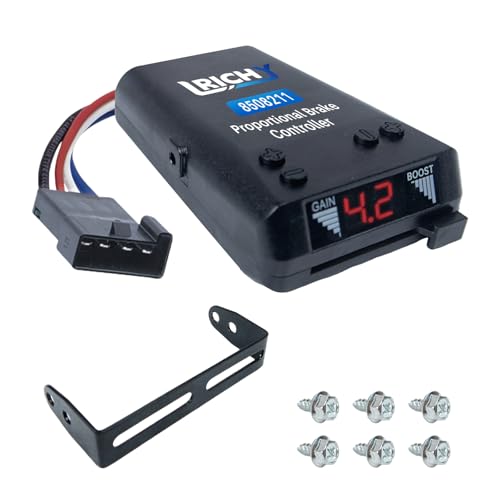
- Handles one to four axles
- LED display provides diagnostics and alarms
- Includes mounting hardware and manual lever
Best For: Larger or varied trailer setups needing broad brake coverage
Best Feature-Rich Upgrade
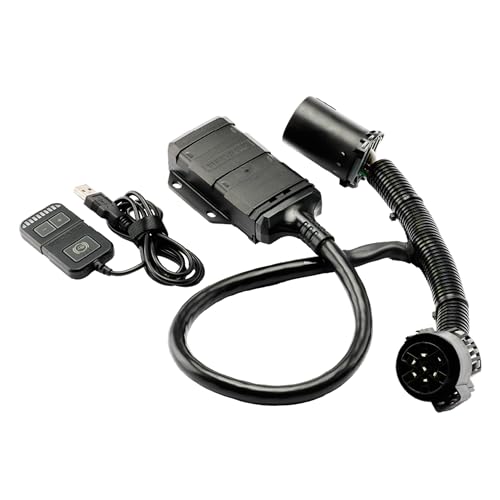
- Six-axis sensor with active calibration
- Everyday and manual off-road braking modes
- Remote, app, CarPlay, and Android Auto control
Best For: Towers wanting advanced control for varied conditions
Best Responsive Fit
Proportional LED Brake Controller

- Proportional braking adjusts to vehicle deceleration
- Supports 1-4 axle trailers
- LED display and flexible mounting
Best For: Campers needing responsive braking across multiple axle configurations
Best Low-Profile Choice

- Time-delay braking for 1-3 axles
- Adjustable power and ramp time
- Low-profile, no-leveling design
Best For: Campers seeking a compact and adjustable controller
Best for Adjustable Control
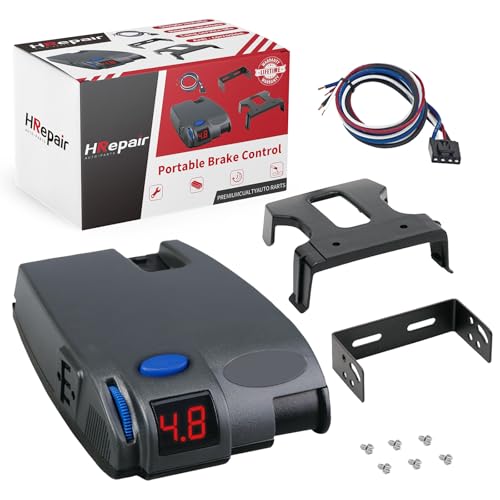
- Proportional braking with three boost settings
- Digital display includes diagnostics
- Flexible plug-and-play mounting
Best For: Campers needing fine control and connection feedback
Best Toyota-Fit Pick
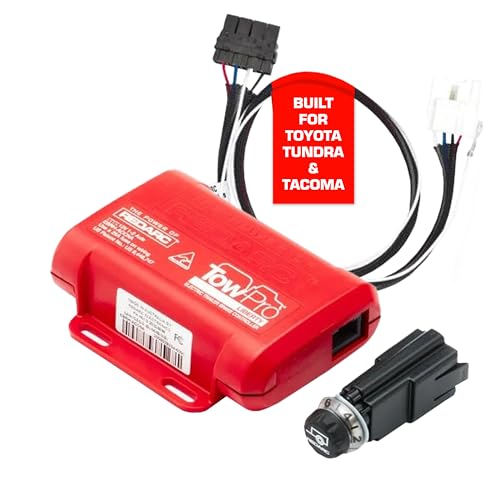
- Proportional braking for smoother stops
- Toyota-specific harness and switch included
- Compact dial with 2-year limited warranty
Best For: Toyota Tundra and Tacoma camper towing
Best Flexible Value
Lrichy 90160 Proportional Controller
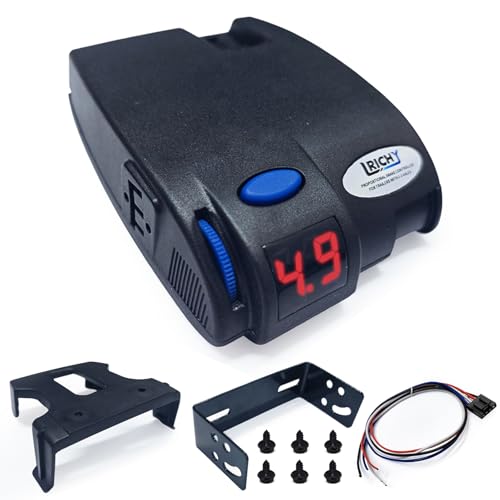
- Supports trailers with 1–3 axles
- LED diagnostics and manual control
- Includes adjustable mounting options
Best For: Multi-brand tow vehicles and electric camper trailers
Best Split-Design Option
Kohree Upgraded Brake Controller

- Separate LCD display and controller
- Automatic leveling with proportional braking
- Nine boost levels for response tuning
Best For: 1- to 4-axle campers needing flexible display placement
Best Integrated Control – Compact Proportional Braking
For campers needing trailer brake controllers for campers with a clean, factory-style appearance, the REDARC Tow-Pro Liberty offers proportional braking for smoother on-road towing. Its compact dash dial and support for one- to two-axle trailers make it a practical fit for many common camper setups.
Best For: RV, camper, SUV, and truck owners who want compact, proportional brake control for everyday highway towing.
Pros:
- Proportional braking helps reduce push and pull during normal towing.
- Compact remote dial avoids a bulky under-dash installation.
- Supports one- to two-axle trailer braking applications.
- Active calibration and sway control support steadier towing.
Cons:
- Vehicle-specific or universal wiring harnesses are sold separately.
- It is intended for up to two axles rather than larger multi-axle trailers.
The Tow-Pro Liberty is a strong choice when smooth proportional control and discreet installation matter more than app-based operation or extensive axle capacity.
Best Portable Option – Bluetooth 7-Way Brake Controller
The CURT Echo is a convenient option among trailer brake controllers for campers when you want to move one controller between compatible tow vehicles. It plugs into the vehicle and trailer 7-way connection, then uses the OneControl Auto app for setup and adjustments.
Best For: Campers who tow with multiple compatible vehicles and prefer a tool-free, portable Bluetooth controller.
Pros:
- Transfers between vehicles without under-dash wiring.
- Uses a triple-axis accelerometer for proportional braking.
- Supports one- to two-axle trailers with two to four brakes.
- Continues using the last programmed settings if Bluetooth is lost.
Cons:
- Requires a vehicle 7-way with active 12V power, ground, and turn-signal circuits.
- App control and notifications depend on Bluetooth communication.
- The app should remain in the foreground for prompt manual-override response.
Echo is especially appealing for shared tow vehicles and simple installation, provided your vehicle supplies the required 7-way power and you are comfortable managing settings through a phone.
Best Broad Axle Coverage – Proportional LED Brake Controller
This Lrichy controller is worth considering for trailer brake controllers for campers when your trailer setup may range from two to eight brakes. Its proportional sensing, LED display, manual lever, and included mounting hardware provide a traditional controller layout with broad stated vehicle and axle compatibility.
Best For: Owners of one- to four-axle trailers who want proportional braking, visible diagnostics, and manual braking control.
Pros:
- Supports trailers with two, four, six, or eight brakes.
- Internal sensors adjust braking based on tow-vehicle braking intensity and speed.
- LED display shows settings, diagnostics, and alarms.
- Includes brackets, screws, and a plug-and-play port for mounting and disconnection.
Cons:
- Vehicle-specific plug-and-play wiring harness is not included.
- Compatibility should be confirmed for the specific tow vehicle and wiring setup.
Its four-axle capacity gives this controller more flexibility than the smaller controllers here, but buyers should budget for any required vehicle-specific harness before installation.
Best Feature-Rich Upgrade – Dual-Mode Sway Control
For campers looking beyond basic trailer brake controllers for campers, the REDARC Tow-Pro Link combines proportional everyday braking with a manual off-road mode. Its six-axis sensor, remote or app control, and SwayStop Plus feature make it suited to owners who want flexible control for both highway and challenging towing conditions.
Best For: Truck and SUV owners seeking plug-and-play installation, app-connected control, and added sway-management features.
Pros:
- Everyday Mode provides proportional braking for on-road towing.
- Manual Off-Road Mode offers user-controlled braking for difficult conditions.
- Six-axis sensing supports active calibration and sway detection.
- Offers control through the included remote, Bluetooth app, Apple CarPlay, or Android Auto.
Cons:
- Its feature set and 1.59-pound weight may be more than needed for basic towing.
- The stated plug-and-play fit is for most trucks and SUVs with a 7-pin connection, so vehicle compatibility should be checked.
The Tow-Pro Link is the most versatile choice in this group for drivers who value dual braking modes and connected controls, particularly when towing conditions vary from highways to off-road terrain.
Best Responsive Fit – Proportional LED Brake Controller
For campers and tow vehicles using 1 to 4 axles, this proportional controller is designed to match trailer braking with the vehicle’s deceleration. Its LED display and flexible mounting options make it a practical choice among trailer brake controllers for campers.
Best For: Campers needing proportional braking across 2-, 4-, 6-, or 8-brake systems.
Pros:
- Automatically adjusts brake pressure as the tow vehicle slows or stops.
- Supports trailers with 1 to 4 axles and multiple brake configurations.
- Clear LED display helps monitor settings and vehicle conditions.
- Can be installed at different angles and includes a mounting bracket and screws.
Cons:
- Vehicle compatibility should be confirmed before installation.
- The supplied notes do not specify whether a vehicle-specific wiring harness is included.
This is a strong fit if smooth, responsive braking and broad axle support matter most. The compact design and visible display add convenience for camper towing.
Best Low-Profile Choice – CURT Venturer NEXT
The CURT Venturer NEXT is a time-delay controller built for campers that need adjustable trailer braking without a bulky control unit. Its low-profile housing, adjustable power, and plug-and-play design make it a practical option among trailer brake controllers for campers.
Best For: Campers towing trailers with 1 to 3 axles and 2 to 6 electric brakes.
Pros:
- Operates 2 to 6 trailer brakes across 1 to 3 axles.
- Power and ramp time are fully adjustable.
- Low-profile design and unique bracket help improve dash clearance.
- Has no internal moving parts and does not require leveling.
Cons:
- Time-delay braking may be less immediate than a proportional controller.
- Its stated capacity is limited to 1-3 axle trailers.
Choose this model when simple adjustment and a compact installation are higher priorities than proportional braking. The no-leveling design can also simplify setup in the tow vehicle.
Best for Adjustable Control – HRepair 90160 Replacement
This HRepair electronic brake controller combines proportional braking with a digital display, manual override, and three boost settings. For campers that face changing loads or road conditions, it offers several ways to fine-tune trailer braking.
Best For: Campers wanting proportional braking, diagnostics, and customizable brake settings for 1-3 axle trailers.
Pros:
- Applies trailer brakes in proportion to the tow vehicle’s braking intensity.
- Digital display shows brake settings and connection status, with continuous diagnostics.
- Manual override lever and three boost settings support different towing conditions.
- Plug-and-play wiring and snap-in clip or bracket mounting offer flexible installation.
Cons:
- Limited to trailers with 1-3 axles according to the supplied details.
- At 1.08 pounds, it is heavier than the other listed controllers.
- As a replacement-style unit, compatibility with the intended vehicle and wiring should be verified.
This is the most feature-focused option in the group for drivers who want display feedback and hands-on braking adjustments. Its self-leveling technology can make setup easier while retaining flexible mounting.
Best Toyota-Fit Pick – REDARC Tow-Pro Liberty
For Toyota owners comparing trailer brake controllers for campers, the REDARC Tow-Pro Liberty offers proportional braking and a factory-style installation. This kit is designed for select Toyota Tundra and Tacoma applications and includes the vehicle-specific harness and switch insert needed for integration.
Best For: Toyota Tundra and Tacoma owners who want a compact, integrated controller for highway and camper towing.
Pros:
- Proportional braking helps reduce push and pull during on-road stops.
- Includes a Toyota-compatible harness and switch insert for supported vehicles.
- Compact dash dial, active calibration, and sway-control features support a clean, steady setup.
- Backed by a 2-year limited warranty.
Cons:
- Vehicle-specific compatibility is limited to listed Toyota applications.
- Some 2022–2023 Tundra installations require additional harness and switch components.
This is a strong choice when seamless Toyota integration matters more than universal fit. Confirm your vehicle year and required components before ordering.
Best Flexible Value – Lrichy 90160 Proportional Controller
The Lrichy 90160 is a flexible option for shoppers seeking trailer brake controllers for campers across several tow-vehicle brands. Its internal inertia sensors provide proportional braking for trailers with two, four, or six electric brakes, while the display provides settings, diagnostics, and alerts.
Best For: Campers and trailer owners who need broad vehicle compatibility and support for up to three axles.
Pros:
- Proportional braking responds to the tow vehicle’s braking intensity and speed.
- Supports 2-, 4-, and 6-brake electric trailer setups.
- LED display shows settings, diagnostics, and alerts.
- Removable connector, mounting options, and a 2-year warranty add convenience.
Cons:
- Vehicle-specific plug-and-play harness is not included.
- Compatibility still requires checking the tow vehicle and trailer wiring.
With broad stated compatibility and adjustable mounting, this controller suits mixed towing needs. Budget separately for the correct vehicle-specific harness if your installation requires one.
Best Split-Design Option – Kohree Upgraded Brake Controller
The Kohree upgraded kit stands out among trailer brake controllers for campers with its split design: the LCD display can be positioned on the windshield while the controller mounts separately inside the vehicle. Proportional braking, automatic leveling, and nine boost levels provide adjustment for different trailer weights and braking characteristics.
Best For: Owners of 1- to 4-axle trailer combinations who prefer a separately mounted display and fine brake-response adjustment.
Pros:
- Proportional braking and automatic leveling simplify setup.
- Split design allows flexible placement of the LCD screen and controller.
- Nine boost levels help tailor sensitivity to the trailer.
- Includes the display, controller, wiring connections, Type-C cable, and manual.
Cons:
- The split installation may require more planning than an all-in-one controller.
- Warranty coverage is limited to 1 year.
This kit is appealing if display placement and braking customization are priorities. Its stated 1- to 4-axle range also makes it a practical fit for varied camper and trailer combinations.
How We Picked the Best Trailer Brake Controllers for Campers
We focused on the features that matter most when towing a camper: braking response, axle compatibility, adjustment range, installation requirements, controller visibility, and vehicle fit. Proportional models received particular attention because they can match trailer braking to the tow vehicle’s deceleration, helping provide smoother stops. We also included time-delay, Bluetooth, plug-and-play, and split-design options for drivers with different budgets and installation preferences.
Always verify the controller’s supported axle and brake count before ordering. A product designed for one to two axles may not be appropriate for a larger camper, while a controller made for multiple axles can be unnecessary for a small travel trailer.
Quick Comparison
| Best For | Recommended Type | What to Look For |
|---|---|---|
| Smooth everyday towing | Proportional | Vehicle-motion sensing and adjustable gain |
| Minimal vehicle modification | Bluetooth or wireless | Reliable app or handheld control and a compatible 7-way connection |
| Simple installation | Plug-and-play | Vehicle-specific harnesses and clear setup instructions |
| Lower-cost towing | Time-delay | Adjustable delay, output, and manual override |
| Visible brake information | LCD or LED display | Readable output, diagnostic, and boost information |
Key Buying Factors for Trailer Brake Controllers for Campers
Braking Technology
Proportional controllers are generally the best choice for frequent or long-distance towing because they respond to the tow vehicle’s braking intensity. Time-delay controllers apply a preset amount of braking after the tow vehicle’s brakes are used and can be effective when properly adjusted, often at a lower price.
Axle and Brake Capacity
Match the controller to your camper’s number of axles and electric brakes. Check whether the rating refers to axles, individual brakes, or both. Choosing a controller with adequate capacity gives you room for the trailer’s actual configuration without exceeding its design limits.
Installation and Compatibility
Confirm that your vehicle has the required 7-way connector, brake wiring, power connection, and mounting space. Vehicle-specific kits can simplify installation, while universal controllers may require more wiring. Bluetooth models reduce dashboard hardware but still need a properly wired trailer connection.
Controls, Displays, and Adjustment
Look for an accessible manual override, gain or output adjustment, and a boost or sensitivity setting when available. An LCD or LED display can make setup easier, particularly when diagnosing wiring or brake-balance issues. A compact control knob may be preferable in vehicles with limited dashboard space.
Who Should Buy Which Trailer Brake Controllers for Campers?
Choose a proportional controller if you tow regularly, drive in hills, or want the smoothest braking behavior. A Bluetooth model suits owners who prefer a clean dashboard and mobile control, provided they are comfortable using an app or wireless interface. Plug-and-play or vehicle-specific kits are the easiest choice for compatible trucks and SUVs.
Choose a time-delay controller if upfront cost and straightforward adjustment matter more than automatic braking response. Multi-axle campers should prioritize a controller with sufficient capacity, while occasional campers may prefer a compact, affordable unit with basic output and manual-override controls. Whichever model you select, test the brakes at low speed after installation and adjust the output gradually before towing in traffic.