The best reciprocating saws for automotive work make fast progress through exhaust components, sheet metal, bolts, and other tough materials. The right model depends on whether you prioritize cordless mobility, pneumatic control, or corded power for extended cutting.
We’ve gathered 10 options across professional and occasional-use categories, with attention to cutting speed, handling, power source, blade compatibility, and workshop practicality.
Best 10 Reciprocating Saws for Automotive Work Picks for 2026
Compact Cordless Pick
DEWALT ATOMIC One-Handed Reciprocating Saw

- Compact 12.5-inch design
- Brushless 20V cordless motor
- LED, pivoting shoe, and tool-free blade release
Best For: Mobile repairs and tight workspaces
High-Speed Air Pick
Ingersoll Rand 429 Reciprocating Air Saw

- Up to 10,000 strokes per minute
- Includes six HSS cutting blades
- Lightweight inline design for tight spaces
Best For: Metal bodywork and exhaust cutting with shop air
Heavy-Duty Corded Pick
DEWALT 12 Amp Reciprocating Saw

- Powerful 12-amp motor
- Four-position blade clamp for flush cuts
- Variable speed and 1-1/8-inch stroke
Best For: Heavy-duty garage cutting with dependable corded power
Body Shop Air Pick
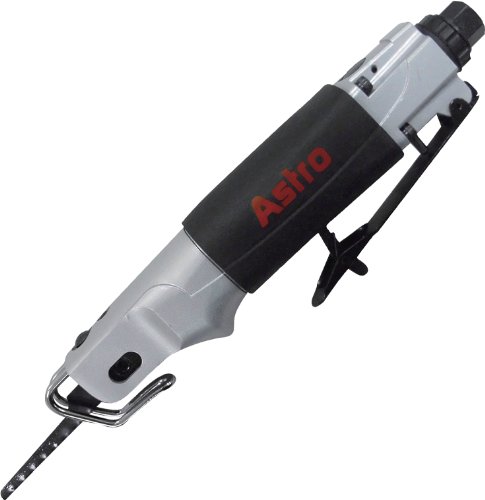
- Built for body, muffler, and exhaust work
- Adjustable blade guide helps extend blade life
- Cuts sheet metal and tight-radius curves
Best For: Detailed automotive body and exhaust repairs
Reliable Corded Power
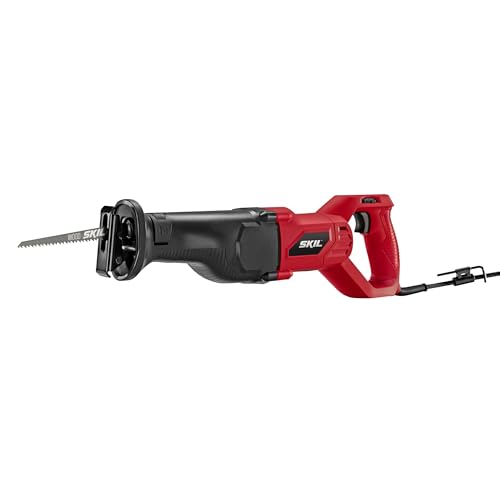
- 7.5-amp motor for demanding cuts
- Tool-less blade changes
- Metal housing with vibration control
Best For: Workshop users who want consistent corded power
Portable Workshop Pick

- Cordless 20V MAX operation
- Battery and charger included
- Variable speed and pivoting shoe
Best For: Portable DIY and repair work
Compact Pneumatic Specialist

- Built for auto-body and exhaust work
- 9,000 strokes per minute
- Lightweight aluminum body with blades
Best For: Auto-body users with an air compressor
Compact Control Pick
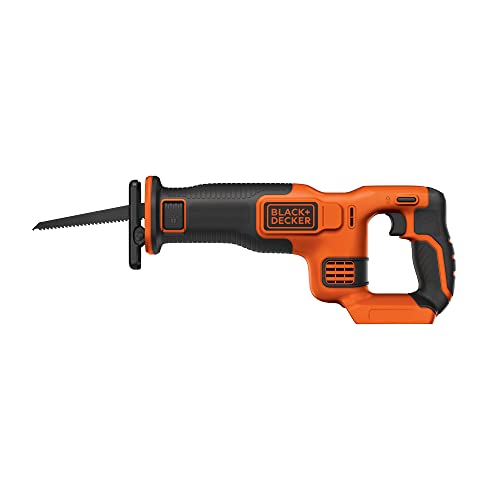
- Variable-speed trigger up to 3,000 SPM
- Pivoting shoe and tool-free blade changes
- Lightweight 4-pound cordless design
Best For: DIY users with POWERCONNECT batteries
Complete Kit Value
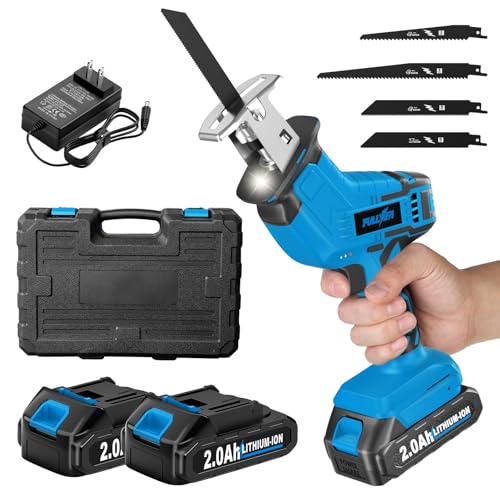
- 0–3,500 SPM variable-speed control
- Two 2.0Ah batteries included
- Includes metal blade, charger, LED, and case
Best For: Buyers wanting a ready-to-use multi-material kit
Compact Cordless Pick – DEWALT ATOMIC One-Handed Reciprocating Saw
DEWALT ATOMIC 20V MAX* Reciprocating Saw, One-Handed, Cordless, Tool Only (DCS369B)
Check Price On AmazonFor automotive work that calls for mobility and access in cramped areas, the DEWALT ATOMIC is a compact cordless option among reciprocating saws for automotive work. Its one-handed design, variable-speed trigger, pivoting shoe, and LED suit quick cuts where corded tools may be cumbersome.
Best For: Mobile automotive repairs and cutting in tight, dimly lit workspaces.
Pros:
- Compact 12.5-inch front-to-back design and lightweight tool-only build.
- Brushless motor and 20V battery platform provide cordless operation.
- Tool-free blade release, variable-speed trigger, pivoting shoe, and LED improve usability.
Cons:
- Battery and charger are not included.
- Supplied details list wood as the surface recommendation, so suitable automotive blades may be needed for metal work.
This is a practical choice when portability and one-handed control matter more than maximum corded power. Pair it with an appropriate blade for the automotive material being cut.
High-Speed Air Pick – Ingersoll Rand 429 Reciprocating Air Saw
The Ingersoll Rand 429 is a pneumatic body saw built for precise automotive-style cutting in sheet metal, aluminum, plastic, and fiberglass. Its inline configuration and compact profile make it well suited to tight or hard-to-reach areas when a compatible compressor is available.
Best For: Garage or industrial users needing fast, controlled cuts in metal and bodywork materials.
Pros:
- Up to 10,000 strokes per minute for fast cutting.
- Includes six high-speed steel blades, hex wrenches, blade retainer, and adjustable blade guide.
- Lightweight 1.3-pound inline design with vibration reduction and lock-out lever.
Cons:
- Requires an air compressor supplying at least 8 CFM at 90 psi.
- The compressor is not included.
- Pneumatic operation requires an air hose and compressor setup.
With its high speed, included blades, and metal-focused capabilities, the 429 is a strong pneumatic choice for body and exhaust work. Confirm compressor capacity before buying.
Heavy-Duty Corded Pick – DEWALT 12 Amp Reciprocating Saw
The DEWALT DWE305 delivers corded power for demanding cutting tasks and is a capable option among reciprocating saws for automotive work when consistent electrical power is available. Its variable-speed trigger, long stroke, and four-position blade clamp add control and cutting flexibility.
Best For: Heavy-duty shop or garage cutting where corded power and flush-cutting versatility are priorities.
Pros:
- 12-amp motor is designed for heavy-duty applications.
- Four-position blade clamp supports flush cutting and multiple approaches.
- Keyless lever-action clamp and variable-speed trigger simplify blade changes and control.
Cons:
- At 8 pounds, it is substantially heavier than compact air-saw options.
- Corded operation limits mobility and requires a 120V power source.
- Supplied details list wood as the surface recommendation, so automotive metal work requires an appropriate blade.
The DWE305 makes sense for users who value sustained corded output and flush-cutting options over portability. Its weight and power cord are worth considering for overhead or confined work.
Body Shop Air Pick – Astro Pneumatic 930 Saber Saw
Astro Pneumatic Tool 930 Air Body Saber Saw with 5pc 24 Teeth per Inch Saw Blades, Black, Silver
Check Price On AmazonThe Astro Pneumatic 930 is a compact pneumatic saber saw aimed directly at body shop, muffler, and exhaust work. It cuts aluminum, plastic, fiberglass, and sheet metal while handling intricate shapes and tight-radius curves on flat or curved surfaces.
Best For: Automotive body repair, exhaust work, and detailed curved cuts.
Pros:
- Designed for body shop repair, muffler, and exhaust applications.
- Adjustable blade guide helps increase blade life.
- Handles aluminum, plastic, fiberglass, and sheet metal, including tight curves.
Cons:
- Pneumatic operation requires an air compressor and hose.
- Supplied details identify it as a bare tool.
- Its listed 4 CFM air consumption still requires a suitable shop-air setup.
The 930 is a focused automotive tool rather than a general-purpose cordless saw. Its compact size and adjustable guide are especially useful for controlled body and exhaust cuts.
Reliable Corded Power – Skil 9206-02
For shoppers comparing reciprocating saws for automotive work, the corded Skil 9206-02 offers consistent 7.5-amp power for demanding cutting tasks. Its metal gear housing, pivoting foot, and counterbalance are useful features when durability, stability, and vibration control matter.
Best For: Workshop users who prefer dependable corded power and are working near a 120-volt outlet.
Pros:
- 7.5-amp motor delivers substantial corded power.
- Tool-less blade changes simplify setup.
- Metal gear housing adds ruggedness and durability.
- Pivoting foot and counterbalance improve stability and vibration control.
Cons:
- Corded design requires access to a power outlet.
- At 7.1 pounds, it is heavier than the cordless option listed here.
- Supplied details identify a wood-cutting blade, so an automotive-specific blade may be needed.
The Skil is a solid shop-oriented choice when continuous power is more important than portability. For automotive cutting, plan on selecting a blade suited to the material being cut.
Portable Workshop Pick – BLACK+DECKER BDCR20C
The BLACK+DECKER BDCR20C is a practical cordless option among reciprocating saws for automotive work. Its included 20V MAX lithium-ion battery and charger support portable cutting, while the variable-speed trigger and pivoting shoe help with control.
Best For: DIYers and mobile users who need a lighter, battery-powered saw for work away from an outlet.
Pros:
- Cordless 20V MAX design improves portability.
- Battery and charger are included in the kit.
- Tool-free blade change speeds up blade replacement.
- Variable-speed trigger and pivoting shoe provide added control.
Cons:
- Battery runtime depends on the included battery and workload.
- The supplied product information recommends the saw for wood, so a suitable automotive blade may be required.
- International versions may differ in fit, labeling, instructions, or terms.
With a 4.5-pound body and cordless operation, this BLACK+DECKER is convenient for portable repairs and occasional cutting. It is best paired with the correct blade for automotive materials.
Compact Pneumatic Specialist – SDRTOP Air Reciprocating Saw
For dedicated automotive cutting, this pneumatic body saw is purpose-built for sheet metal, exhaust work, and auto-body tasks. Its compact 1.5-pound aluminum-alloy body, 9,000 strokes per minute, and included blade assortment make it a focused choice among reciprocating saws for automotive work.
Best For: Auto-body and repair users with an air compressor who need a compact tool for metal-sheet cutting and tight spaces.
Pros:
- Designed for auto repair, auto-body, installation, and exhaust work.
- Lightweight aluminum-alloy body weighs 1.5 pounds.
- 9,000 strokes per minute suits fast cutting of sheet metal up to 1.5 mm thick.
- Includes blades, hex wrenches, air nipples, and a manual.
Cons:
- Requires connection to an air compressor.
- Blade changes use the included Allen wrench rather than a tool-free system.
- Its stated sheet-metal capacity is limited to 1.5 mm.
This is the most automotive-focused option of the three, especially for light sheet metal and body work. Its pneumatic power and compact form are advantageous, provided an appropriate compressor and air connection are available.
Compact Control Pick – BLACK+DECKER BDCR20B
BLACK+DECKER 20V MAX* POWERCONNECT 7/8 in. Cordless Reciprocating Saw (BDCR20B)
Check Price On AmazonFor reciprocating saws for automotive work, the BLACK+DECKER BDCR20B offers a compact cordless design, variable-speed control, and a pivoting shoe for maneuvering around awkward cuts. Its 20V MAX POWERCONNECT battery is interchangeable with other compatible tools, though the battery is not included.
Best For: DIY automotive users who already own compatible BLACK+DECKER POWERCONNECT batteries and want a lightweight saw for cutting plastic, rubber composites, fiberglass, or other general materials.
Pros:
- Variable-speed trigger provides up to 3,000 strokes per minute.
- Pivoting blade shoe helps maintain control when changing cutting angles.
- Tool-free blade changes and an electric brake support convenient, controlled use.
- Compact 4-pound design is easy to maneuver.
Cons:
- Battery and charger are not included.
- Only one reciprocating saw blade is included.
- Its listed 7/8-inch cutting specification may be limiting for larger jobs.
The BDCR20B is a practical choice when portability and easy handling matter more than a complete kit. It is especially appealing to existing POWERCONNECT owners, while new users should budget for a battery and charger.
Complete Kit Value – FULLYEA 3500SPM Cordless Saw
Among reciprocating saws for automotive work, the FULLYEA cordless model stands out as a ready-to-use kit with two 2.0Ah batteries, a charger, and blades for wood and metal. Its stepless trigger, 28mm stroke, LED light, and lightweight form suit varied cutting tasks in a garage or workshop.
Best For: Buyers who want a complete cordless package for cutting metal, plastic, and other materials without purchasing batteries, charger, or basic blades separately.
Pros:
- 0–3,500 SPM stepless speed control supports different materials and cutting conditions.
- Includes two 2.0Ah batteries for extended use between charges.
- Tool-free lever blade change saves setup time.
- Includes wood and metal blades, charger, LED light, and carrying case.
Cons:
- Battery compatibility is stated for Makita batteries, but the supplied notes do not specify a broader compatibility range.
- The plastic handle material may feel less substantial than a professional-duty design.
- The limited warranty details are not specified.
With its batteries and accessories included, the FULLYEA offers strong convenience for occasional automotive and household work. The broad speed range and included metal blade make it more adaptable than a bare-tool purchase.
Budget Versatility Pick – 20V Cordless Reciprocating Saw
This 20V cordless model is one of the more flexible reciprocating saws for automotive work, offering variable speed up to 3,500 SPM and blades intended for wood, PVC, metal pipe, and similar materials. Its cordless design supports mobility around a vehicle, garage, or outdoor project.
Best For: Budget-minded DIY users seeking a basic cordless saw for occasional metal, plastic, wood, and general cutting tasks.
Pros:
- Cordless design makes it convenient to use around vehicles and other locations.
- 0–3,500 SPM variable speed provides adaptable cutting control.
- Four blades and a battery and charger are included.
- Notes describe it as suitable for wood, metal, bone, and other materials.
Cons:
- The supplied specifications are inconsistent about the battery details, listing one 9V battery while the product title describes two batteries.
- The included blade selection is described generally, with limited detail about the specific metal blade type.
- Warranty information is not provided in the supplied notes.
This saw offers useful versatility and cordless mobility at a potentially accessible price, but the unclear battery information warrants verification before purchase. It is best suited to lighter, occasional work rather than demanding professional use.
How We Picked the Best Reciprocating Saws for Automotive Work
We focused on features that matter in vehicle repair rather than general-purpose claims. The selection includes cordless, corded, and pneumatic saws so you can match the tool to your garage setup and workload. We considered motor or air performance, variable-speed control, blade changes, ergonomics, stroke speed, portability, and the types of blades included or supported.
Automotive cutting often involves cramped access, thin sheet metal, rusted fasteners, exhaust tubing, and intermittent heavy use. A compact one-handed saw may be ideal for underbody work, while an air body saw can offer better control for sheet-metal trimming when a compressor is available.
Quick Comparison
| Type | Best For | Main Advantage | Trade-Off |
|---|---|---|---|
| Cordless reciprocating saw | Mobile repairs and general garage work | Portability and fast setup | Battery runtime and added weight |
| Corded reciprocating saw | Frequent, extended cutting | Consistent power | Requires an outlet and cable management |
| Pneumatic air saw | Sheet metal and precision automotive cuts | Compact control and low heat buildup | Needs a suitable compressor and hose |
Key Buying Factors for Reciprocating Saws for Automotive Work
Power Source and Runtime
Cordless models are convenient for roadside work, dismantling vehicles, and areas without nearby outlets. Check whether the listing includes batteries and a charger; tool-only models can cost more after adding a battery. Corded saws are practical for shop benches and long jobs, while pneumatic tools require adequate compressor airflow and a compatible fitting.
Speed, Stroke, and Control
High strokes per minute can speed up rough cuts, but variable-speed triggers are more useful around thin panels, trim, and delicate components. A controllable tool helps reduce blade wandering, vibration, and accidental damage to nearby parts.
Access, Grip, and Blade Changes
Compact designs are easier to position between suspension components and inside engine bays. Look for a comfortable grip, manageable weight, adjustable shoe, and tool-free blade changes. Verify that replacement blades are widely available and choose metal-cutting blades with the correct tooth pattern for the material.
Durability and Included Accessories
For regular shop use, prioritize a robust housing, dependable clamp, and strong warranty support. Included blades are useful for starting a project, but they should not outweigh motor performance or ergonomics. Pneumatic body saws may include fine-tooth blades suited to sheet metal, while general reciprocating saws accept a broader range of demolition and metal blades.
Who Should Buy Which Reciprocating Saws for Automotive Work?
Choose a cordless model if mobility and quick setup matter most. These are the most versatile choice for home mechanics, vehicle dismantling, and repairs away from the workbench.
Choose a corded model if you routinely make long cuts in a garage and want uninterrupted power without managing batteries.
Choose a pneumatic air saw if you already own a capable compressor and mainly cut body panels, brackets, exhaust parts, or other automotive sheet metal. For occasional users, a compact cordless saw may be simpler and more economical overall.