Choosing the right timing device can make a real difference at the track. A good standalone racing lap timer helps you measure laps accurately, improve consistency, and focus on driving instead of setup.
In this roundup, we look at options for different budgets, vehicles, and timing methods so you can quickly find the best fit for your track days or race prep.
Best 10 Standalone Racing Lap Timer Picks for 2026
Race-Grade GPS Meter
Mini S Standalone GPS Performance Meter

- 25Hz GPS for precise timing
- Built-in storage for long sessions
- Lap timer plus drag meter features
Best For: Drivers and riders wanting compact GPS timing with app analysis
Simple Cycle Timer

- Compact and easy to operate
- Waterproof for outdoor riding
- Real-time feedback for cyclists
Best For: Cyclists needing a simple lap timer for training and sprints
Infrared Track Timer
LT-4 Motorcycle and Car Lap Counter
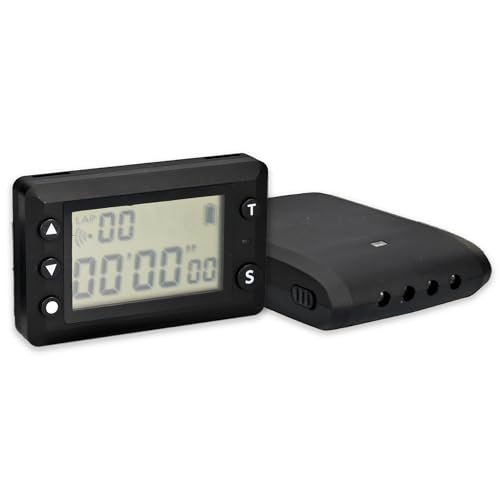
- 0.01s timing resolution
- Stores 1,000+ sessions
- Large 2.2-inch readable screen
Best For: Track-day users who want a compact timer with extensive storage
Pro GPS Lap Timer

- Dedicated GPS lap timing for cars
- 2-inch LED display with Bluetooth
- App and remote control support
Best For: Car drivers wanting a dedicated GPS timer for track sessions
Best for Easy Setup
INEBIZ LT-2 race receiver for track timing

- 0.01-second lap timing
- 940nm sensor resists sunlight interference
- Syncs with unlimited receivers
Best For: track days and shared team timing
GPS In-Car Timer
Longacre Hot Lap GPS triggered timer

- GPS timing without IR beacons
- Stores up to 200 laps
- Backlit display shows lap comparisons
Best For: drivers who want in-car lap memory and comparison
Precision GPS Timer
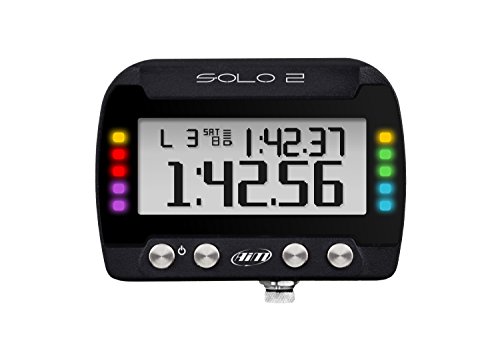
- Timing gap no higher than 2/100 second
- Database of 2,000+ tracks
- Seven backlight colors
Best For: frequent circuit drivers who value precision and track maps
High-Precision Pick
25Hz GPS Lap Timer with App Support

- 25Hz GPS for fast, precise timing
- Over 1500 predefined tracks plus custom splits
- iOS and Android app for analysis
Best For: track-focused drivers and riders who want very precise lap timing
Data-Logging Choice
20Hz Lap Timer with PC Analysis

- 20Hz GPS with multi-satellite support
- Session recording works without constant Bluetooth
- PC portal and iOS app add analysis tools
Best For: drivers who want lap timing plus deeper race data analysis
Value Track Timer
10Hz RaceBox Lap and Drag Meter

- 10Hz GPS for lap and drag timing
- Includes predictive and custom drag modes
- Comes with mount, cable, and carry case
Best For: car drivers wanting a simple lap timer with drag features
Race-Grade GPS Meter – Mini S Standalone GPS Performance Meter
If you want a standalone racing lap timer that also handles drag testing, the RaceBox Mini S is built for exactly that kind of all-in-one use. Its 25Hz GPS, multi-satellite support, and onboard storage make it a strong fit for drivers who want precise timing without depending on a phone for every session.
Best For: Drivers and riders who want a compact GPS lap timer with drag timing, built-in storage, and app-based analysis.
Pros:
- 25Hz GPS timing for high-frequency performance tracking
- Built-in storage can record long sessions without a constant Bluetooth connection
- Supports lap timing, drag meter functions, and custom track features
- Works with cars and motorcycles, with a compact dashboard-friendly design
Cons:
- Relies on app features for deeper analysis and comparison
- More capability than a basic lap timer, which may be unnecessary for simple use
Overall, the Mini S stands out as a polished standalone racing lap timer for users who want accurate GPS timing plus extra performance tools in one small unit.
Simple Cycle Timer – SC SPORTCOUNT Bike Timer
SC Sportcount Bike Timer - Water Proof Lap Timer for Bike Training - Push Button Lap Counter
Check Price On AmazonThe SC SPORTCOUNT Bike Timer is a straightforward choice if you need a basic standalone racing lap timer for cycling-focused training. It keeps the design compact and user-friendly, with real-time feedback and a waterproof build that suits outdoor rides.
Best For: Cyclists who want a simple, durable timer for training sessions, sprints, and bike laps.
Pros:
- Purpose-built for cyclists and bike training
- Compact, easy-to-use design with just one setting
- Waterproof and built for outdoor use
- Provides real-time feedback during rides
Cons:
- Limited feature set compared with more advanced lap timers
- Designed specifically for cycling rather than motorsport use
As a no-frills option, this timer makes sense when simplicity matters more than advanced data, especially for riders who just want reliable lap tracking.
Infrared Track Timer – LT-4 Motorcycle and Car Lap Counter
LT-4 Infrared Laptimer, Motorcycle Lap Counter, Car Racing Timing System (Set)
Check Price On AmazonThe LT-4 is a practical standalone racing lap timer for drivers who want quick reads, strong storage, and broad vehicle compatibility. With infrared timing, a large screen, and downloadable session history, it is aimed at users who want detailed lap data without a complicated setup.
Best For: Track-day drivers, riders, and kart users who want a compact infrared timer with deep session storage.
Pros:
- 0.01s resolution with low time tolerance for detailed timing
- Stores 1,000+ sessions and up to 99 laps per session
- Large 2.2-inch screen is easy to read mid-race
- Quick-mount design fits cars, motorcycles, bikes, karts, and RC cars
Cons:
- More focused on timing and storage than app-based coaching features
- Requires USB download for full history analysis
For buyers who prioritize clear lap timing, long memory, and broad mounting flexibility, the LT-4 offers a strong balance of simplicity and data depth.
Pro GPS Lap Timer – AIM Solo 2 GPS Lap Timer
If you are shopping for a standalone racing lap timer with a more premium motorsport feel, the AIM Solo 2 is a focused GPS option for car use. It pairs a 2-inch LED display with Bluetooth connectivity and app or remote control, giving drivers a compact timing tool for track sessions.
Best For: Car drivers who want a dedicated GPS lap timer with a clean display and app-connected controls.
Pros:
- Dedicated GPS lap timing for car use
- Compact 2-inch LED display for track visibility
- Bluetooth connectivity with app and remote control support
- Dashboard-mount form factor keeps installation simple
Cons:
- Designed for cars only, not a multi-vehicle solution
- No batteries included, so setup requires separate power planning
The Solo 2 is a sensible pick if you want a dedicated motorsport timer that stays focused on lap timing and track use rather than adding unnecessary extras.
Best for Easy Setup – INEBIZ LT-2 race receiver for track timing
If you want a standalone racing lap timer setup that stays simple and accurate, the INEBIZ LT-2 is built around an infrared receiver/transmitter system. It delivers 0.01-second lap timing, uses a sunlight-resistant 940nm sensor, and is designed for easy plug-and-play use on cars, motorcycles, bikes, and karts.
Best For: Drivers and teams who want a shared infrared lap timing system for track days and practice sessions.
Pros:
- 0.01-second lap timing with stated 0.0035s tolerance per lap.
- 940nm infrared sensor helps reduce ambient light interference.
- Up to 15 meters between transmitter and receiver.
- One transmitter can sync with unlimited receivers.
Cons:
- Requires an infrared transmitter/receiver-style setup instead of GPS timing.
- Transmitter batteries are not included.
- Best suited to track environments where the beacon can be mounted.
Overall, this is a practical choice if you want a dedicated standalone racing lap timer system for multiple vehicles or riders. Its main advantage is straightforward IR timing with team-friendly syncing, while the battery-powered transmitter keeps the setup portable for track use.
GPS In-Car Timer – Longacre Hot Lap GPS triggered timer
The Longacre Hot Lap is a standalone racing lap timer for drivers who want GPS-based timing without installing IR beacons at the track. It records up to 200 laps, shows differences versus your last and best laps, and uses an in-car mounted GPS sensor with a backlit graphic display.
Best For: Drivers who want a GPS lap timer with lap memory and easy in-car visibility.
Pros:
- GPS-triggered timing avoids trackside IR beacon installation.
- Stores up to 200 laps for review.
- Compares current laps against last and best laps.
- Backlit 3-inch display is easy to read in the car.
Cons:
- Less portable than a simple beacon-only setup because it mounts in-car.
- Not as track-database focused as some dedicated GPS units.
- Battery or power details aren’t highlighted in the supplied notes.
This is a strong pick if you want a standalone racing lap timer that emphasizes convenience and lap comparison. The built-in memory and in-car readout make it especially useful for session-by-session improvement.
Precision GPS Timer – AIM Solo 2 GPS lap timer
AIM Solo 2 GPS Lap Timer All New Much faster and more precise Configurable LED's
Check Price On AmazonThe AIM Solo 2 is a compact standalone racing lap timer built for precise GPS timing and quick track-day use. It calculates lap times with a maximum gap no higher than 2/100 second, supports two satellite constellations, and includes a color backlit screen plus a database of more than 2,000 tracks.
Best For: Racers who want a precise GPS lap timer with track database support and configurable lighting.
Pros:
- Very precise timing with a maximum gap no higher than 2/100 second.
- Uses data from two satellite constellations.
- Built-in database covers more than 2,000 tracks worldwide.
- Seven available backlight colors for easier viewing.
Cons:
- Battery life is listed at 5 hours, so long sessions may need planning.
- Single-unit design may offer less shared-team flexibility than IR systems.
- GPS timing depends on satellite reception rather than a track beacon.
If you want a standalone racing lap timer with a polished interface and strong track support, the Solo 2 stands out. It blends precise GPS performance with a large track database, making it a solid option for frequent circuit drivers.
High-Precision Pick – 25Hz GPS Lap Timer with App Support
If you want a standalone racing lap timer with very high GPS update speed, the RaceBox Mini is built for quick, precise track sessions. It uses a 25Hz GPS module and supports multiple satellite systems, so it’s aimed at drivers who want detailed lap and acceleration timing without relying on a phone for the core measurement.
Best For: Drivers and riders who want a compact lap timer with very high-frequency GPS timing and app-based analysis.
Pros:
- 25Hz GPS timing for highly detailed performance tracking
- Lap Timer function includes over 1500 predefined tracks
- Custom track setup supports up to 4 split lines
- Mobile app available for iOS and Android for session analysis
Cons:
- More focused on timing and analysis than on a large built-in display
- Premium feature set may be more than casual users need
The RaceBox Mini stands out if you care most about precision and track flexibility in a standalone racing lap timer. Its combination of 25Hz GPS, multi-constellation support, and app review tools makes it a strong pick for serious lap-time improvement.
Data-Logging Choice – 20Hz Lap Timer with PC Analysis
The GTLaunch unit is a standalone racing lap timer designed for drivers who want timing, logging, and deeper post-run analysis in one box. Its 20Hz GPS, 6-axis motion sensor, and app-based playback tools make it a practical choice for anyone comparing lap performance or acceleration runs.
Best For: Drivers who want a lap timer with built-in data logging, route creation, and PC/app analysis.
Pros:
- 20Hz multi-satellite GPS with support for GPS, GLONASS, Galileo, and Beidou
- Records sessions without needing a constant Bluetooth connection
- GTLaunch iOS app includes replay, telemetry overlays, and sharing tools
- PC portal adds deeper analysis like color-coded speed traces
Cons:
- iOS app focus may be less convenient for non-Apple users
- Windshield mount setup may not suit every cockpit layout
This is a strong option if you want more than basic lap timing and prefer a device that also functions as a racing data logger. The added route creation, leaderboard features, and PC analysis tools give it a broader performance-tracking scope.
Value Track Timer – 10Hz RaceBox Lap and Drag Meter
This standalone racing lap timer from RaceBox is aimed at drivers who want accurate timing plus simple session review in a compact box. With 10Hz GPS, lap timing, and drag-meter functions, it covers the basics well for track days and acceleration testing.
Best For: Car owners who want a straightforward lap timer with drag-measurement features and mobile app analysis.
Pros:
- 10Hz GPS performance meter for lap and acceleration tracking
- Measures 0-60 mph, 60-130 mph, and 1/4 mile times
- Predictive, speed, distance, and custom drag modes add flexibility
- Includes windshield mount, charging cable, and carry case
Cons:
- Designed for cars only, not motorcycles
- Lower GPS frequency than the higher-end RaceBox Mini
If you want a practical lap timer with proven RaceBox app support and drag testing built in, this model is a sensible middle-ground option. It’s less advanced than newer high-frequency units, but it still delivers the core timing tools most track-day drivers need.
How We Picked the Best Standalone Racing Lap Timer
We focused on timing accuracy, ease of use, mounting flexibility, display clarity, and whether the unit works well as a Standalone Racing Lap Timer without relying on a complicated app workflow. We also considered GPS refresh rate, infrared compatibility, and how useful each unit is for both casual track days and more serious performance testing.
Quick Comparison
GPS-based timers are usually the easiest choice for road courses because they do not need trackside transmitters and often add speed, split, and performance data. Infrared systems can be a strong option where a receiver or beacon setup makes sense, especially for repeated closed-course use. In-car display timers tend to be the simplest if you want instant feedback without extra devices.
Key Buying Factors for a Standalone Racing Lap Timer
Timing Method
GPS timers are best for broad track use and portability. Infrared options can be useful when you want a more controlled timing setup. If you only need basic lap timing, a simpler unit may be enough; if you want more data, look for models with acceleration or performance logging.
Update Rate and Accuracy
Higher GPS refresh rates can improve responsiveness, especially in fast direction changes and short course sections. For most buyers, a 10Hz to 25Hz system offers a strong balance of responsiveness and value.
Display and Controls
Choose a unit with readable information at a glance. Large digits, clear LEDs, and straightforward buttons matter when you are focused on driving. A timer should be easy to start, review, and reset between runs.
Mounting and Vehicle Fit
Make sure the unit suits your cockpit, dash, or handlebars. Some products are better for motorcycles, while others are designed for cars, track-day builds, or universal use.
Extras You May Actually Use
Mobile app support, drag timing, accelerometer data, configurable alerts, and split functions can be helpful, but only if they fit your goals. Do not overpay for features you will never check.
Who Should Buy Which Standalone Racing Lap Timer?
If you want the easiest all-around solution, a GPS-based Standalone Racing Lap Timer is usually the best choice. If you race on a tighter budget or need a simple practice tool, basic timers can still deliver solid value. Motorcycle riders should prioritize compact size, rugged mounting, and easy visibility. Drivers who want deeper analysis should look for units with higher refresh rates, configurable data output, and performance logging features.
The best pick is the one that matches how you drive, where you time laps, and how much data you actually plan to use after each session.