A dual-mode car head-up display can show driving information using GPS, OBD2, or both, making it easier to monitor speed without looking down at the instrument cluster. The best models also add useful readings such as engine temperature, voltage, RPM, navigation prompts, or overspeed alerts.
We compared 10 popular options across compatibility, display clarity, installation, data coverage, and everyday usability. This guide helps you choose the right HUD for your car, truck, or SUV.
Best 10 Dual Mode Car Head Up Displays Picks for 2026
Most Versatile Dual-Mode HUD

- Extensive OBD2 vehicle data and fault-code functions
- GPS fallback for vehicles without OBD2 support
- 11 RGB colors with alarms and performance tests
Best For: Drivers wanting comprehensive readings and customization
Simple Dual-System Pick

- Core speed, temperature, voltage, and distance readings
- Automatic brightness and adjustable measurement units
- Plug-and-play design with GPS fallback
Best For: Drivers seeking basic information and easy setup
Best Connected Display
HUD-V3 CarPlay and Android Auto
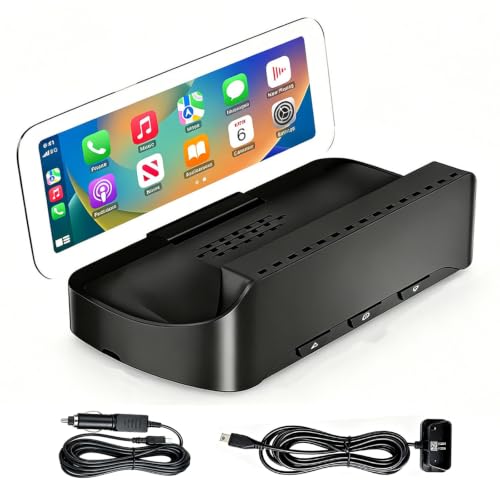
- Wireless Apple CarPlay and Android Auto
- OBD and cigarette-lighter power options
- Anti-glare lens with adjustable angle
Best For: Navigation and smartphone connectivity
Best for Vehicle Data
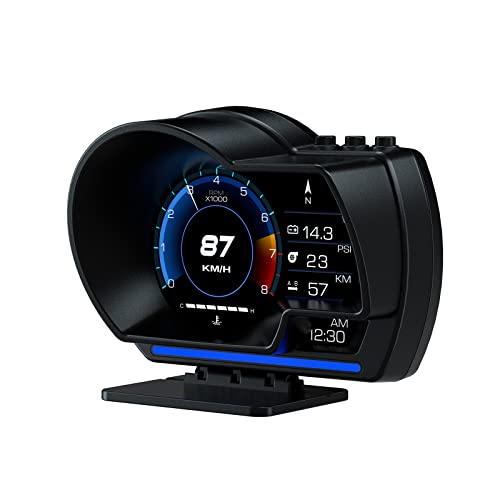
- Reads more than 100 vehicle data types in OBD mode
- GPS fallback for non-OBD2 vehicles
- 10 interfaces and color-changing alerts
Best For: Drivers wanting broad vehicle monitoring
Best Plug-and-Play OBD HUD

- 3-inch high-definition display with reduced reflections
- Shows speed, RPM, temperature, voltage, and alarms
- Automatic or manual power control with unit switching
Best For: Drivers wanting a simple OBD II/EUOBD vehicle display
Best Diagnostic Dual-System HUD

- Switches between OBD2 data and GPS tracking
- Scans and clears engine fault codes
- Offers customizable alerts, interfaces, and mounting
Best For: Drivers needing diagnostics plus GPS fallback
Best GPS Dual-Satellite HUD

- GPS and Beidou satellite positioning
- Automatic brightness with glare-reducing shield
- Four display modes and three overspeed alarms
Best For: Drivers wanting a simple USB-powered GPS speed display
Best GPS Value

- GPS+BDS positioning with a 10Hz refresh rate
- USB-powered with no OBD2 port required
- Large display with automatic brightness
Best For: Simple speed projection across USB-equipped vehicles
Best Heavy-Duty Pick

- Shows speed plus RPM, temperature, voltage, and fuel use
- Includes alerts and OBD2 diagnostic functions
- Large HD screen with automatic brightness
Best For: Compatible OBD2 vehicles needing broader dashboard data
Best Compact Alternative

- 10Hz GPS+BDS speed tracking
- No OBD2 port needed; uses USB power
- Automatic brightness and large MPH display
Best For: Lightweight speed-only HUD use in compatible vehicles
Most Versatile Dual-Mode HUD – Advanced OBD2+GPS Gauge
For drivers comparing dual mode car head up displays, this model stands out for its unusually broad data coverage. It can use OBD2 for vehicle information or GPS for speed and driving data when OBD2 is unsupported, with customizable colors and multiple safety alerts.
Best For: Drivers who want extensive vehicle data, GPS fallback, and customizable display settings.
Pros:
- OBD2 mode provides extensive readings, including RPM, temperatures, fuel data, and fault-code functions.
- GPS mode supports vehicles that do not support the OBD2 protocol.
- Offers 11 RGB colors, adjustable brightness, performance tests, and configurable alarms.
Cons:
- The most advanced readings depend on OBD2 compatibility.
- Its many functions may be more than needed for drivers seeking a basic speed display.
This is the feature-rich pick in the group, especially if you want more than speed and voltage. The included mounting pieces and calibration controls add flexibility during setup.
Simple Dual-System Pick – M7 OBD/GPS Speedometer
This M7 is a straightforward option for shoppers looking at dual mode car head up displays. It shows key driving information through OBD or GPS, automatically adjusts brightness, and uses a plug-and-play installation approach.
Best For: Drivers who want a simple speed, temperature, and voltage display with GPS backup.
Pros:
- Displays speed, water temperature, voltage, and driving distance in OBD mode.
- GPS mode provides speed, voltage, and distance when OBD mode is unsuitable.
- Supports adjustable units, automatic brightness, and speed, temperature, and voltage alarms.
Cons:
- OBD II compatibility is limited according to the notes, including incompatibility with electric, diesel, pickup, RV, and modified vehicles.
- GPS mode offers fewer vehicle readings than OBD mode.
The M7 focuses on core information rather than an expansive gauge suite. Check your vehicle’s OBD compatibility before buying; otherwise, GPS mode is the intended fallback.
Best Connected Display – HUD-V3 CarPlay and Android Auto
Unlike conventional windshield-projection units, this HUD-V3 displays information on its own anti-glare glass lens. For drivers considering dual mode car head up displays, its main advantage is wireless CarPlay and Android Auto, along with flexible OBD or cigarette-lighter power.
Best For: Drivers who prioritize smartphone navigation, calls, music, and voice-assistant access on a dedicated dashboard display.
Pros:
- Supports wireless Apple CarPlay and Android Auto for maps, calls, messages, music, Siri, and Google Assistant.
- Includes both OBD and cigarette-lighter power cables for flexible installation.
- Uses an anti-glare, high-brightness display with adjustable viewing angle and automatic brightness.
Cons:
- The image does not project onto the windshield; it appears on the unit’s glass lens.
- Sunglasses can make the projected image invisible.
- The OBD cable supplies power only and does not read raw vehicle data.
This is better viewed as a connected smart display than a traditional vehicle-data HUD. Its dedicated lens, stable silicone base, and wireless phone integration make it appealing for navigation-focused drivers.
Best for Vehicle Data – wiiyii P6 OBD2/GPS HUD
The wiiyii P6 is aimed at drivers who want more than a basic speed readout. Among dual mode car head up displays, it combines OBD2 data access with GPS fallback, multiple interfaces, automatic brightness, and a color-changing overspeed alert.
Best For: Drivers who want broad OBD2 readings and flexible dashboard or windshield mounting.
Pros:
- OBD mode can read more than 100 kinds of vehicle data, according to the supplied notes.
- GPS mode remains available for vehicles without the OBD2 protocol.
- Includes 10 interfaces, automatic brightness adjustment, and blue-to-red abnormal-driving alerts.
Cons:
- Vehicles without OBD2 receive only GPS functionality.
- The extensive interface options may require more setup than a basic display.
The P6 is a strong choice when vehicle monitoring is a priority. Its included suction-cup bracket, adhesive, and OBD cable support more than one installation approach.
Best Plug-and-Play OBD HUD – Dual-Mode Car Display
This dual mode car head up display is a practical choice for drivers who want a straightforward OBD II/EUOBD connection and a readable 3-inch screen. It automatically powers on with the vehicle, displays key engine information, and retains a manual switch for added control.
Best For: Drivers seeking an easy-install OBD display with broad vehicle data and adjustable units.
Pros:
- Plug-and-play design automatically adapts to compatible OBD II or EUOBD vehicles.
- Displays speed, engine speed, water temperature, battery voltage, and useful alarms.
- High-definition 3-inch screen uses nanotechnology to reduce unwanted reflections.
- Supports kilometer/mile and Celsius/Fahrenheit switching, plus automatic or manual power control.
Cons:
- Compatibility depends on the vehicle having an OBD II or EUOBD system.
- The supplied notes do not specify a GPS mode or independent satellite-based operation.
Choose this model when simple installation and core vehicle diagnostics matter more than advanced navigation features. Its automatic startup and shutdown can also help reduce unnecessary battery drain while parked.
Best Diagnostic Dual-System HUD – OBD2 and GPS Display
For drivers comparing dual mode car head up displays, this MH unit stands out for combining OBD2 vehicle data with a GPS mode. It offers extensive monitoring, fault-code scanning and clearing, configurable alerts, and several installation and display options, though vehicle compatibility should be checked carefully.
Best For: Drivers who want diagnostic functions, configurable alerts, and GPS fallback in one display.
Pros:
- Switches between OBD2 diagnostics and GPS satellite tracking modes.
- Displays speed, RPM, fuel consumption, temperatures, voltage, mileage, altitude, compass, and more.
- Can scan and clear engine fault codes and perform acceleration and brake tests.
- Offers multiple interfaces, brightness levels, unit settings, alarms, and dashboard or windshield mounting.
Cons:
- Limited to OBDII/EOBD-compatible vehicles produced after 2008; it does not support OBD I or JOBD.
- The notes list incompatibility with several vehicle types and brands, including diesel, hybrid, pickup, and RV models.
- On an incompatible OBD2 protocol, only the GPS function is available.
This is the most feature-rich option of the three for users who want more than a speed readout. Its broad diagnostics and alert controls are useful, but the extensive compatibility exclusions make pre-purchase verification especially important.
Best GPS Dual-Satellite HUD – W3 Digital Speedometer
This GPS-focused choice among dual mode car head up displays uses GPS and Beidou satellite signals rather than an OBD connection. It provides plug-and-play USB power, automatic brightness adjustment, multiple viewing modes, and configurable overspeed alerts for a simple driving information setup.
Best For: Drivers who want a GPS speedometer with satellite positioning, automatic brightness, and no complex installation.
Pros:
- GPS+Beidou dual-mode chip supports faster satellite searching and stable positioning.
- Displays speed, driving time, distance, satellite clock, and direction without an OBD installation.
- Automatic light sensing and an integrated shield help improve daytime visibility and reduce nighttime glare.
- Provides three overspeed alarm levels, four display interfaces, unit switching, and automatic power-off.
Cons:
- Its supplied features focus on GPS-derived information rather than engine diagnostics or fault codes.
- Requires a vehicle 5V USB interface or cigarette-lighter USB power source.
Consider this model if you prefer satellite-based speed and direction data with a clean USB setup. The automatic brightness and complete power-off behavior are particularly practical for frequent nighttime use and long-term parking.
Best GPS Value – USB Dual-Mode Car HUD
If you want dual mode car head up displays without relying on an OBD2 port, this compact GPS speedometer is a practical choice. Its GPS+BDS positioning, 10Hz refresh rate, large MPH display, and automatic brightness adjustment focus on clear speed information in everyday driving.
Best For: Drivers seeking a simple, USB-powered speed display for cars, trucks, or motorcycles.
Pros:
- Dual-mode GPS+BDS positioning connects with up to 32 satellites.
- USB 5V plug-and-play power avoids OBD installation.
- Large, anti-reflective font and automatic brightness suit day and night driving.
- Compact 1.6-ounce design is easy to place on the dashboard.
Cons:
- GPS speed can vary by about 0.6–1.8 MPH.
- Signal may be affected in tunnels, garages, poor weather, or behind metallic windshield film.
- It displays speed rather than broader vehicle diagnostics.
This model is a strong fit when straightforward speed projection and broad USB compatibility matter more than engine data. As with other GPS-based displays, open-sky reception provides the best results.
Best Heavy-Duty Pick – 5.5-Inch OBD2 Car HUD
For shoppers comparing dual mode car head up displays with more detailed vehicle monitoring, this 5.5-inch OBD2 model offers a broader information set. It shows speed alongside RPM, water temperature, voltage, and fuel consumption, with alerts and diagnostic functions for compatible vehicles.
Best For: Drivers with compatible OBD2/EOBD vehicles who want a large display and added car data.
Pros:
- Large 5.5-inch HD screen with automatic brightness adjustment.
- Displays speed, RPM, water temperature, voltage, and fuel consumption.
- Provides speeding and voltage alerts plus failure detection features.
- Plug-and-play connection works with many vehicles generally made after 2003.
Cons:
- Requires a compatible OBD2/EOBD port.
- Its functions depend on the vehicle’s supported protocols and available data.
- Larger dimensions may take more dashboard space than a basic speed display.
This is the most feature-rich option in the group for drivers who want more than projected speed. Confirm OBD2/EOBD compatibility before buying, especially for an older or specialized vehicle.
Best Compact Alternative – GPS+BDS USB Car HUD
This compact option is another practical entry among dual mode car head up displays, using GPS+BDS technology to provide refreshed speed information without an OBD connection. It combines a large, readable MPH display with automatic brightness and USB power for flexible installation.
Best For: Drivers who want a lightweight, no-OBD speed HUD with satellite-based tracking.
Pros:
- Dual-mode GPS+BDS system supports fast, stable speed tracking.
- 10Hz refresh rate and up to 32-satellite connectivity support responsive readings.
- USB 5V plug-and-play setup suits many cars, trucks, and motorcycles.
- Automatic brightness and anti-reflective shading improve readability.
Cons:
- GPS readings may have a normal deviation of 0.6–1.8 MPH.
- Satellite reception can weaken in tunnels, underground garages, heavy rain, fog, or behind metallic film.
- It focuses on speed and does not provide the OBD2 vehicle metrics of a diagnostic HUD.
Choose this model when a lightweight speed-only display is preferable to a larger diagnostic unit. Its USB connection broadens compatibility, while its GPS limitations are typical of satellite-based devices.
How We Picked the Best Dual Mode Car Head Up Displays
We focused on displays that offer either dual GPS and OBD2 operation or practical multi-mode switching between vehicle data sources. We also considered compatibility with older and newer vehicles, readability in bright conditions, installation complexity, power options, and the usefulness of available data.
Because product specifications can vary by seller and vehicle, confirm the supported OBD2 protocol, plug type, display units, and included cables before ordering. GPS-based models are generally easier to install, while OBD2 models can provide more detailed vehicle information when compatible.
Quick Comparison
| Feature | What to Look For |
|---|---|
| Data source | GPS for broad compatibility; OBD2 for vehicle-specific readings; dual systems for flexibility |
| Display | Large, high-contrast numerals with adjustable brightness and minimal glare |
| Power | OBD2, USB, cigarette-lighter, or dual-cable support based on your installation preference |
| Extra readings | RPM, coolant temperature, battery voltage, mileage, navigation, and overspeed alerts |
| Vehicle fit | Verify compatibility with your car, truck, SUV, model year, and regional speed units |
Key Buying Factors for Dual-Mode Car Head-Up Displays
GPS Versus OBD2 Coverage
GPS speed readings work across more vehicles but may take time to lock onto satellites and can be less responsive in tunnels or covered areas. OBD2 connects directly to the vehicle and can offer faster speed updates plus engine data, but compatibility is not universal. A dual-system model gives you a fallback when one source is unsuitable.
Readability and Placement
Choose a screen large enough to read at a glance without blocking your view. Adjustable brightness, color controls, and a windshield reflection panel are useful in changing light. Place the unit low on the dashboard or within the manufacturer’s recommended projection area.
Installation and Alerts
Most units are plug-and-play, but cable routing and calibration still matter. Look for clear setup instructions, automatic brightness control, selectable MPH or KM/H, and configurable overspeed warnings. Avoid models whose alerts are distracting or difficult to disable.
Who Should Buy Which Dual Mode Car Head Up Displays?
- Choose GPS-only if you want broad compatibility and a simple speed display with minimal setup.
- Choose OBD2-only if your vehicle is confirmed compatible and you want RPM, voltage, temperature, or fault information.
- Choose a dual-system model if you drive multiple vehicles, want backup operation, or need both speed and expanded vehicle data.
- Choose a larger-screen HUD if readability is your top priority, especially in bright daylight or for drivers who prefer larger numerals.
- Choose a CarPlay or Android Auto model if navigation prompts and phone-connected driving information matter as much as speed.
For the best match, prioritize confirmed vehicle compatibility and clear viewing over the longest feature list. A reliable, distraction-free display is more useful than extra gauges you will rarely check.