A lighter starter battery can appeal to racers, but the right choice depends on more than a high cranking-amp claim. Terminal layout, case size, charging compatibility, and reliable starts all matter.
These 10 options span car and powersports applications. Use the guide below to narrow your shortlist by vehicle fit and electrical demands before choosing a battery.
Best 10 Lithium Racing Battery System Picks for 2026
Best Restart Backup
Antigravity ATX12HD Motorcycle Battery

- 480 cranking amps
- Push-button restart reserve
- 3-pound, four-terminal design
Best For: Compatible powersports vehicles needing restart backup
Best for Car Audio
XS Power PWR-S5-3400 LTO Battery

- Listed at 1000 cranking amps
- Group 34 LTO powercell
- M6 terminal bolts included
Best For: Compatible car-audio and performance-car builds
Best Heavy-Duty Powersports Pick

- 18Ah and stated 800CCA
- LCD voltage and charge readout
- Requires regulated charging
Best For: Compatible touring bikes and UTVs
Best Group 26 Car Option
TPE Start-Stop LiFePO4 Battery

- Listed at 600 cold cranking amps
- Battery-level display
- Limited-use emergency switch
Best For: Compatible Group 26 passenger-car installations
High-Cranking YTX20L-BS Pick

- 12.8V, 10Ah; listed 700A maximum cranking output
- About 3.7 lb with built-in BMS
- Check YTX20L-BS dimensions and polarity
Best For: Compatible powersports vehicles needing a lightweight YTX20L-BS replacement
Compact YTX14-BS Pick

- 12.8V, 8Ah with listed 480 CCA
- 3.1 lb; spacers and screws included
- BMS protects against key electrical faults
Best For: Compatible YTX14-BS applications where compact size and low weight matter
Ready-to-Install YTX20L-BS Pick

- 12.8V, 10Ah at about 3.7 lb
- Arrives charged; built-in BMS
- Title and bullets differ on cranking rating
Best For: Compatible YTX20L-BS applications seeking a charged LiFePO4 replacement
Best for Powersports
KEMIMOTO 12V LiFePO4 Motorcycle Battery

- 2.2-pound battery with claimed 480A CCA
- Pre-charged with power display
- Five included fitment spacers
Best For: Compatible motorcycles, ATVs, and other powersports vehicles
Best for App Monitoring
Group 35 LiFePO4 Starter Battery
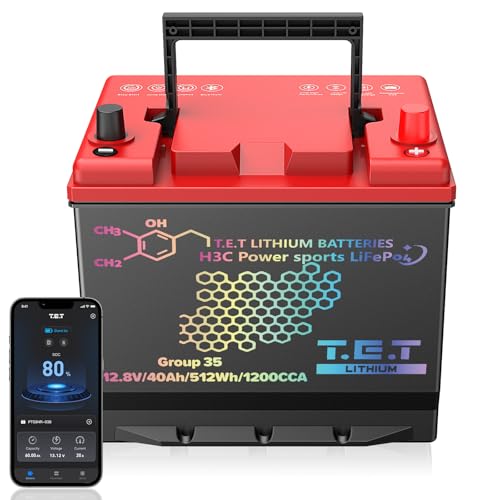
- 12.8V, 40Ah Group 35 design
- Bluetooth status and remote controls
- BMS guards against key electrical faults
Best For: Group 35 vehicles whose owners want battery monitoring
Best Group 26 Option

- 12.8V Group 26 design
- Specified 600 CCA
- BMS protection and start-stop support
Best For: Vehicles requiring a compatible Group 26 starter battery
Best Restart Backup – Antigravity ATX12HD Motorcycle Battery
For a motorcycle or powersports lithium racing battery system, the Antigravity ATX12HD combines 480 cranking amps with a built-in power reserve designed to help you restart with the push of a button. It replaces YTX12 and YTX14 battery sizes, provided your vehicle and battery box match.
Best For: Riders with compatible motorcycles, ATVs, or UTVs who want an on-battery restart option.
Pros:
- RE-START technology reserves power for a push-button restart.
- Weighs 3 pounds and has a four-terminal design for flexible installation.
- Battery management system protects against overcharge, over-discharge, temperature issues, and cell imbalance.
Cons:
- Not intended for cars or trucks.
- Requires a matching YTX12 or YTX14-size fitment.
This is a practical pick when restart capability matters as much as cranking output. Confirm the battery size and terminal arrangement before ordering.
Best for Car Audio – XS Power PWR-S5-3400 LTO Battery
The XS Power PWR-S5-3400 targets car-audio and performance-car builds rather than motorcycle fitments. If your lithium racing battery system calls for a 12-volt Group 34 LTO powercell, its listing specifies 1000 cranking amps and includes M6 terminal bolts.
Best For: Builders planning a compatible Group 34 battery installation for car audio or a performance car.
Pros:
- Listed at 1000 cranking amps for high-output starting applications.
- LTO deep-cycle design is marketed for car audio and performance racing cars.
- M6 terminal bolts are included.
Cons:
- Capacity information conflicts: the title says 10Ah, while the supplied specifications say 20Ah.
- M6 terminals may require checking cable and connector compatibility.
Its Group 34 format and stated cranking output make it worth considering for a planned build, but verify capacity, dimensions, and electrical fitment before purchase.
Best Heavy-Duty Powersports Pick – TYKOOL LFP30L-BS-PRO
For a lithium racing battery system serving a large motorcycle or UTV, the TYKOOL LFP30L-BS-PRO offers a stated 18Ah capacity and 800 cold cranking amps. Its LCD readout lets you check voltage and charge level at the battery, while the listed YTX30L-BS replacement size helps narrow fitment.
Best For: Compatible Harley touring bikes, UTVs, and snowmobiles with regulated charging systems.
Pros:
- 18Ah stated capacity, 800CCA, and a 200A battery management system.
- LCD readout displays voltage and charge level.
- IP66-rated enclosure is specified for dust and water protection.
Cons:
- Requires a regulated 13.8–14.6V charging system; the maker warns against unregulated vehicles.
- Its 6.6 x 5 x 6.9-inch case and left-negative, right-positive polarity must match your setup.
This is a feature-rich choice for the specified powersports applications, but checking charging voltage, polarity, and battery-box clearance is essential.
Best Group 26 Car Option – TPE Start-Stop LiFePO4 Battery
The TPE Group 26 LiFePO4 battery is a passenger-car option for shoppers building a lithium racing battery system around a compatible start-stop vehicle. It is listed at 12.8 volts and 600 cold cranking amps, with a battery-level display and an emergency switch for a limited period of use after low-power protection activates.
Best For: Passenger-car owners whose battery tray, polarity, terminals, and electrical system suit this Group 26 model.
Pros:
- Listed at 600 cold cranking amps with a battery-level display.
- Battery management system provides overcharge, over-discharge, and overcurrent protection.
- Emergency switch can allow 10 minutes of use after low-power protection engages.
Cons:
- Fitment requires checking its 8.14 x 6.88 x 7.5-inch dimensions and left-negative, right-positive polarity.
- Weight information conflicts: the supplied bullets say 12.8 pounds, while the specifications say 8.8 pounds.
Its display and emergency function are useful distinctions, but verify physical fit and the conflicting weight specification before treating it as a drop-in replacement.
High-Cranking YTX20L-BS Pick – Forgetyo 10Ah LiFePO4 Battery
For a lithium racing battery system built around a YTX20L-BS-size starting battery, this Forgetyo model offers a listed 12.8V, 10Ah capacity and up to 700A cold-cranking output. It weighs about 3.7 pounds, but fit still depends on tray dimensions and terminal orientation.
Best For: Riders replacing a YTX20L-BS battery who want a lightweight, high-cranking LiFePO4 option for a compatible powersports vehicle.
Pros:
- Listed 700A maximum cranking output and 128Wh capacity.
- Built-in BMS protects against overcharging, over-discharging, short circuits, and overheating.
- Compatible with a 14.6V, 2A–5A lithium charger; listed charge time is about two hours at 5A.
Cons:
- Requires a compatible lithium charger rather than an assumed lead-acid charging setup.
- Left-negative, right-positive layout and 6.89 × 3.43 × 6.1-inch size must match the vehicle.
The strongest reason to choose this model is its stated cranking output in a lightweight YTX20L-BS package. Confirm the battery compartment, polarity, and charging system before buying.
Compact YTX14-BS Pick – AMPXELL 8Ah Lithium Battery
If your lithium racing battery system calls for a smaller YTX14-BS-format starter battery, this AMPXELL option lists 12.8V, 8Ah, and 480 CCA. At 3.1 pounds, it includes spacers to help accommodate compatible battery trays.
Best For: Owners replacing a compatible YTX14-BS or listed equivalent who prioritize low weight and included fitment spacers.
Pros:
- Listed 480 CCA starting output at a stated weight of 3.1 pounds.
- Includes four universal spacers and installation screws.
- Built-in BMS provides overcharge, over-discharge, and short-circuit protection.
Cons:
- Its 8Ah capacity is lower than the 10Ah YTX20L-BS options in this roundup.
- Check the 5.9 × 3.4 × 5.1-inch case, terminals, and vehicle requirements before treating it as a drop-in replacement.
This is the compact choice when a YTX14-BS-size battery suits the vehicle. The spacers add installation flexibility, but they do not replace a fit and electrical-spec check.
Ready-to-Install YTX20L-BS Pick – Forgetyo 10Ah LiFePO4 Battery
This Forgetyo battery is another YTX20L-BS-format choice for a lithium racing battery system, with a listed 12.8V, 10Ah capacity and 3.7-pound weight. The listing says it arrives charged and requires no acid activation or water maintenance.
Best For: Owners of compatible YTX20L-BS powersports equipment who want a charged, maintenance-free LiFePO4 replacement.
Pros:
- Listed 10Ah, 128Wh capacity and at least 2,000 deep cycles.
- Built-in BMS covers overcharge, over-discharge, and short-circuit protection, with cell balancing.
- Supports charging with a compatible 14.6V, 2A–5A lithium charger.
Cons:
- The title says 800A, while the specification bullets state 700 CCA; verify the required starting rating.
- Its 6.89 × 3.43 × 6.1-inch size and left-negative, right-positive terminals must match the application.
Its ready-to-install presentation is convenient, but the inconsistent current figures make specification verification especially important. Match the case, polarity, and starting requirements before ordering.
Best for Powersports – KEMIMOTO 12V LiFePO4 Motorcycle Battery
For a motorcycle or ATV lithium racing battery system, this pre-charged KEMIMOTO battery offers 480A claimed cold-cranking output in a 2.2-pound package. Five included EVA spacers help adapt it to several common powersports battery sizes.
Best For: Riders replacing a compatible 12V powersports starter battery who want a lightweight option with flexible mounting.
Pros:
- Pre-charged, with a power display and threaded copper terminals.
- Includes five spacers for fitting a range of listed battery sizes.
- Built-in BMS provides temperature-related cutoff protection.
Cons:
- Confirm battery dimensions, terminal layout, and spacer fit before ordering.
- The stated temperature cutoff may interrupt power in extreme conditions.
Its low weight and adaptable fit make it a practical powersports pick, but verify your vehicle’s battery requirements rather than relying on the compatibility list alone.
Best for App Monitoring – Group 35 LiFePO4 Starter Battery
If your lithium racing battery system calls for a Group 35 automotive starter battery, this 12.8V, 40Ah model adds Bluetooth app monitoring and remote discharge control. Its built-in BMS monitors against overcharge, over-discharge, and overcurrent.
Best For: Drivers seeking a Group 35 LiFePO4 replacement with app-based status checks and controls.
Pros:
- App displays battery status and supports remote power control.
- Built-in BMS provides multiple electrical protections.
- Listed at 1,500 cycles at 100% depth of discharge.
Cons:
- Requires a Group 35-compatible tray and the specified terminal orientation.
- The supplied notes do not state a cold-cranking-amp rating; verify starting requirements before purchase.
The monitoring features distinguish this option, but fit, polarity, and starting-current compatibility matter more than the app when choosing a starter battery.
Best Group 26 Option – 600A LiFePO4 Car Battery
For a Group 26 lithium racing battery system, this 12.8V LiFePO4 starter battery lists 600 CCA and supports start-stop use. Its BMS helps protect against overcharge, over-discharge, and overcurrent.
Best For: Drivers whose vehicles require a Group 26 battery with left-negative, right-positive terminals.
Pros:
- Specified 600 CCA for starting performance.
- Built-in BMS supports electrical protection.
- Designed for start-stop systems and requires no regular maintenance.
Cons:
- Vehicle-specific fit makes dimension and polarity checks essential.
- The supplied notes do not provide a capacity or weight figure for direct comparison.
This is a straightforward Group 26 choice if its size, terminal layout, and stated starting output match your vehicle’s specifications.
How We Picked These Lithium Racing Battery System Options
We organized the 10 selected batteries around the details that matter when replacing a starter battery: listed fitment, battery chemistry, case group or powersports size, terminal layout, stated cranking performance, and features such as a battery management system (BMS) or charge display. The list covers both automotive and powersports batteries, so it is not a ranking of interchangeable products. Published specifications are a starting point, not a substitute for checking your vehicle’s requirements. We did not independently verify cranking claims or test the batteries on track.
Quick Comparison: Start with the Vehicle
For cars: The XS Power Group 34 LTO powercell suits shoppers looking for that specific size and chemistry; the TPE and other Group 26 LiFePO4 option target a different case size and terminal arrangement. The automotive starter battery with app monitoring offers a feature-focused alternative, but its dimensions and terminals still need checking.
For motorcycles and powersports: The Antigravity ATX12HD, TYKOOL LFP30L-BS-PRO, Forgetyo YTX20L-BS, 800A YTX20L-BS, YTX14-BS replacement, and KEMIMOTO battery cover different replacement sizes. Match the exact battery code and dimensions rather than assuming all 12V powersports batteries fit the same tray.
Key Buying Factors for a Lithium Racing Battery System
Fit and Electrical Compatibility
Check tray length, width, and height; hold-down clearance; terminal polarity; and cable reach. A Group 26 car battery will not replace a Group 34 simply because both are nominally 12V. Powersports codes can also have close-looking variants with different terminal positions. Confirm fit against the vehicle manual and the battery maker’s application list.
Starting Demands and Chemistry
Compare the manufacturer’s starting-current rating with your engine’s needs, especially for high-compression builds or cold-weather use. CCA, CA, and peak-amp figures are not interchangeable. Most options here are LiFePO4, while the XS Power product is listed as LTO; confirm that your charging system and any external charger support the specific chemistry you choose. Lithium starter batteries are not automatically suitable for deep cycling or every start-stop system.
Protection and Race-Day Practicality
A BMS may help protect against electrical faults, while a charge display or app can make pre-start checks easier. Verify what each feature actually monitors or protects against. Also consider weight, warranty terms, and any event rules governing battery mounting, isolation, and chemistry. Secure installation matters as much as the battery itself.
Who Should Buy Which Lithium Racing Battery System?
Choose by fit first. Group 34 shoppers should investigate the XS Power; Group 26 shoppers can compare the two listed Group 26 options. Riders should start with their specified YTX or other replacement code, then compare dimensions, terminals, and starting requirements among the matching products. Consider the app-monitored automotive option if battery status and an emergency-start reserve appeal to you, once fit is confirmed. If your vehicle’s charging voltage or battery requirements are unclear, verify them with the manufacturer or a qualified technician before switching to lithium.