Dialing in tire pressure is one of the fastest ways to improve grip, consistency, and confidence on track. A quality low pressure racing tire gauge helps you make small, repeatable adjustments where they matter most.
In this roundup, we focused on accuracy, readability, bleed control, and build quality so you can choose the right gauge for your car, class, and budget.
Best 10 Low Pressure Racing Tire Gauge Picks for 2026
Precision Low PSI Gauge
JACO Elite Low Pressure Tire Gauge - 15 PSI
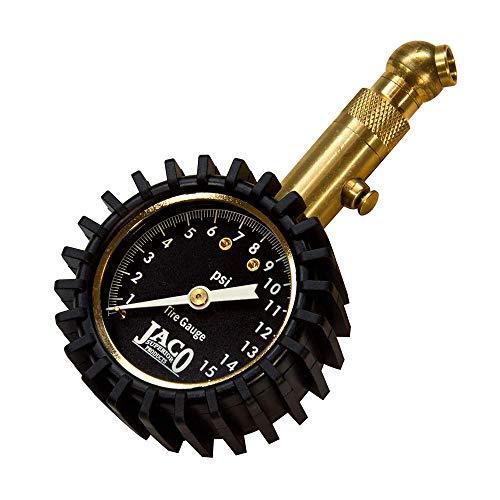
- 0-15 PSI scale for low-pressure tires
- ANSI-calibrated accuracy within ±1.5%
- Built-in bleeder valve and swivel chuck
Best For: ATVs, dirt bikes, quads, and tractors
Trackside Analog Gauge
QuickCar Racing Products 56-061
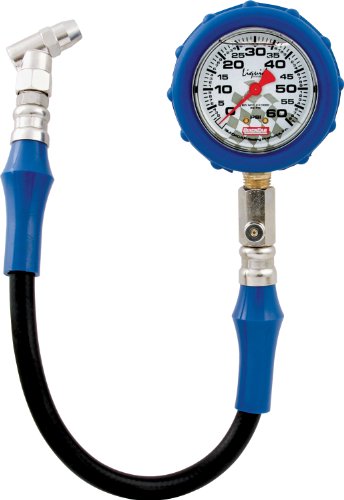
- Liquid-filled analog construction
- Swivel chuck and relief valve included
- Vehicle-specific, race-oriented design
Best For: Drivers who want a simple trackside gauge
Durable Mid-Range Gauge
JACO Elite Low Pressure Tire Gauge - 30 PSI

- 0-30 PSI range for broader low-pressure use
- ANSI-calibrated and battery-free
- Deflator valve plus 360 swivel chuck
Best For: Off-road tire setups that need more range
Glow Dial Racing Gauge

- 0-30 PSI analog gauge
- 2-1/2 inch glow-in-dark dial
- 1 lb increments for finer checks
Best For: Racers who want a large, readable dial
Track-Ready Low-Range Gauge
Longacre 52-52034 0-15 PSI Tire Pressure Gauge
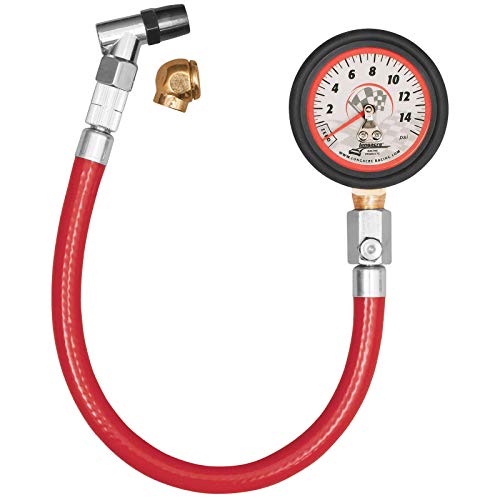
- 0-15 PSI range for low-pressure tires
- Glow-in-the-dark 2-inch face
- Flexible hose with angle and ball chuck
Best For: racing and other low-pressure tire applications
Off-Road Low Pressure Pick
ATsafepro 30 PSI Mechanical Tire Gauge

- 2.5-inch glow-in-the-dark dial
- Flexible hose with rotating angled nozzle
- Built-in air bleeder valve
Best For: ATV, off-road, and lawn equipment tire checks
Balanced Garage-and-Track Choice
Longacre 52-52024 0-30 PSI Tire Pressure Gauge

- 0-30 PSI range for broader low-pressure use
- Glow-in-the-dark 2-inch face
- 14-inch hose with angle and ball chucks
Best For: garage and track users who want more range
Low-Pressure Precision Pick
JACO ElitePro-X 0-15 PSI with Lightning Chuck

- ANSI B40.1 calibrated to ±1.5% up to 15 PSI
- Lightning Chuck creates a secure airtight seal
- Quick-release and built-in bleeder support fine tuning
Best For: Off-road users who need accurate low-range tire checks
Repeatable Shop Gauge
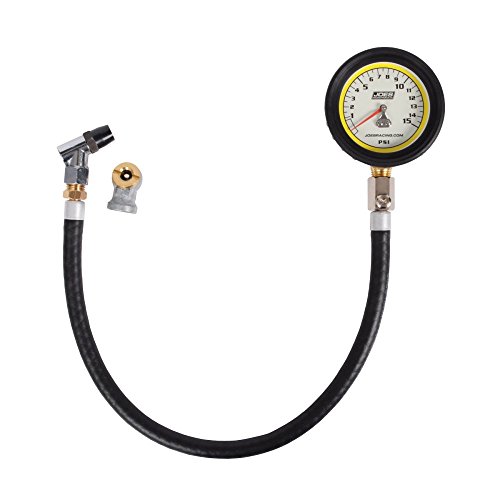
- 0-15 PSI range with 1/2 lb. increments
- Steel housing with rubber cushion for durability
- Glow-in-the-dark face for easier visibility
Best For: Racers wanting repeatable analog readings
Wide-Range Budget Option
Joes Racing 32307 0-60 PSI Gauge

- 0-60 PSI range for broader use
- Glow-in-the-dark face and release button
- 17-inch hose with angled ball chuck included
Best For: Buyers who need a versatile analog gauge for multiple pressure ranges
Precision Low PSI Gauge – JACO Elite Low Pressure Tire Gauge – 15 PSI
If you need a low pressure racing tire gauge for ATVs, trail bikes, dirt bikes, quads, or tractors, this JACO Elite model is built for precise low-PSI checks without batteries. Its 0-15 PSI range, ANSI-calibrated accuracy, and glow dial make it a practical choice when exact pressure matters.
Best For: Riders and mechanics who want a rugged 0-15 PSI gauge for low-pressure off-road tires.
Pros:
- ANSI-calibrated accuracy within ±1.5% at a NIST-accredited facility
- 0-15 PSI scale is tailored to low-pressure tires
- Built-in air bleeder valve and 360-degree swivel chuck add convenience
- Glow-in-the-dark 2-inch dial is easy to read
Cons:
- Lower PSI range may not suit higher-pressure applications
- Brass-and-guard build is solid, but not the lightest option
This is a straightforward, durability-focused gauge for users who prioritize repeatable low-pressure readings and easy valve access. The lifetime warranty adds confidence for frequent use in garage or trackside settings.
Trackside Analog Gauge – QuickCar Racing Products 56-061
QuickCar Racing Products 56-061 Tire Pressure Gauge with Swivel Chuck and Relief Valve
Check Price On AmazonThis low pressure racing tire gauge is geared toward drivers who want a simple analog tool with a swivel chuck and relief valve. The liquid-filled design and vehicle-specific fit make it a practical garage or track accessory for checking tire pressure without extra electronics.
Best For: Racers and enthusiasts looking for a basic liquid-filled gauge with a swivel chuck.
Pros:
- Liquid-filled construction for a traditional analog feel
- Swivel chuck improves valve access
- Relief valve adds pressure adjustment convenience
- Vehicle-specific fit and U.S. origin may appeal to racing users
Cons:
- Supplied details do not list a PSI range
- Warranty is only 30 days
Compared with more feature-rich gauges, this one keeps things simple and focused on core tire-pressure checking. If you want a no-frills racing-style gauge with a swivel chuck, it is a clean fit.
Durable Mid-Range Gauge – JACO Elite Low Pressure Tire Gauge – 30 PSI
For shoppers comparing a low pressure racing tire gauge that can also cover slightly wider low-PSI needs, this JACO Elite 0-30 PSI model offers the same no-battery, analog approach with a broader range. It is calibrated to ANSI standards and built with brass, a rubberized guard, a deflator valve, and a 360 swivel chuck for practical use on ATVs, UTVs, dirt bikes, and tractors.
Best For: Off-road owners who want a rugged 0-30 PSI gauge with an easy-to-read glow dial.
Pros:
- ANSI-calibrated accuracy within ±1.5%
- 0-30 PSI scale covers a wider low-pressure range
- Built-in deflator valve and 360 swivel air chuck
- Glow-in-the-dark 2-inch dial and lifetime warranty
Cons:
- Not as focused on ultra-low PSI as a 0-15 PSI model
- Analog brass build may be bulkier than compact gauges
This is a strong middle-ground option if you want JACO’s rugged build but need a little more range than a dedicated 15 PSI gauge. The combination of accuracy, a readable dial, and deflation control makes it versatile for off-road tire care.
Glow Dial Racing Gauge – Joes Racing Products 0-30 PSI
If you want a low pressure racing tire gauge with a larger face and simple analog readout, this Joes Racing Products gauge is built around ease of use. Its glow-in-the-dark dial, 0-30 PSI range, and 1 lb increments make it suitable for quick pressure checks in racing or garage settings.
Best For: Users who want a large-dial analog gauge with 1 lb increments.
Pros:
- 0-30 PSI range suits many low-pressure applications
- 2-1/2 inch glow-in-the-dark dial is easy to read
- 1 lb increments support fine pressure checks
- Alloy steel and rubber materials give it a durable build
Cons:
- 30-day warranty is shorter than some alternatives
- No built-in deflator or swivel chuck listed in the supplied details
This gauge keeps the design simple while emphasizing readability and measurement resolution. If you value a bigger face and straightforward analog operation, it is an easy option to work into a racing tool kit.
Track-Ready Low-Range Gauge – Longacre 52-52034 0-15 PSI Tire Pressure Gauge
If you want a low pressure racing tire gauge built for careful adjustments, this Longacre model keeps the focus on readability and consistency. The 0-15 PSI range, glow-in-the-dark 2-inch face, flexible hose, and dual chuck setup make it a practical pick for race cars, motorcycles, bikes, and other low-pressure tires.
Best For: Drivers and racers who want a compact 0-15 PSI gauge for precise low-pressure tire checks.
Pros:
- 2-inch glow-in-the-dark face is easy to read in low light.
- Flexible hose plus angle and ball chuck improve valve access.
- Shock-resistant rubber bumper adds protection for garage or track use.
- Internal gauge damper is designed for more consistent readings.
Cons:
- 0-15 PSI range is specialized for low-pressure use only.
- No battery-free digital features or extra display functions.
This is a straightforward mechanical gauge for users who value durability and a narrow pressure range. If your setup lives in the low-pressure zone, the Longacre offers a focused, no-frills approach to tire checking.
Off-Road Low Pressure Pick – ATsafepro 30 PSI Mechanical Tire Gauge
This low pressure racing tire gauge is aimed at ATV, off-road, and utility tire checks where a readable dial and easy valve access matter. The 2.5-inch glow-in-the-dark face, flexible hose, angled rotating nozzle, and built-in air bleeder make it a practical tool for quick mechanical pressure adjustments.
Best For: ATV, off-road, and lawn equipment owners who want a mechanical gauge with an easy-to-read low-pressure dial.
Pros:
- 2.5-inch glow-in-the-dark dial is easy to read in low light.
- Flexible hose and 360-degree angled rotating nozzle help reach valves.
- Built-in air bleeder valve allows quick pressure relief.
- No batteries required, with brass construction and ANSI Grade B40.1 accuracy claim.
Cons:
- 30 PSI max range is less specialized than tighter low-range gauges.
- Mechanical design may be overkill if you only need a very simple checker.
For buyers who want a durable analog gauge with a low-pressure focus, this ATsafepro model covers the basics well. It is especially useful if you want easy access, light-up visibility, and a manual bleed feature in one tool.
Balanced Garage-and-Track Choice – Longacre 52-52024 0-30 PSI Tire Pressure Gauge
If you need a low pressure racing tire gauge with a little more range, this Longacre 0-30 PSI model is built for garage, shop, and track use. It keeps the same glow-in-the-dark 2-inch face, flexible hose, and angle-plus-ball chuck setup, while adding a pressure range that works for a wider set of low-pressure tires.
Best For: Drivers who want a dependable mechanical gauge for low-pressure tires with more range than a 0-15 PSI model.
Pros:
- 0-30 PSI range offers more flexibility for low-pressure setups.
- 2-inch glow-in-the-dark face improves visibility.
- 14-inch flexible hose and two chuck styles add convenience.
- Internal gauge damper is intended to improve reading consistency.
Cons:
- Not as narrowly focused as a dedicated 0-15 PSI gauge.
- Mechanical format means no digital readout or backlit screen.
This Longacre option is a solid middle ground if you want low-pressure capability without being locked into an ultra-narrow range. It is a practical choice for users who move between street, race, and shop tasks.
Low-Pressure Precision Pick – JACO ElitePro-X 0-15 PSI with Lightning Chuck
If you need a low pressure racing tire gauge for ATV, UTV, dirt bike, or other off-road tires, the JACO ElitePro-X is built for careful 0-15 PSI checks. It focuses on accuracy, a secure no-leak connection, and easy pressure adjustment in one lightweight tool.
Best For: Riders and off-road drivers who want a calibrated, low-range gauge for precise tire setup under 15 PSI.
Pros:
- Calibrated to ANSI B40.1 standards with ±1.5% accuracy up to 15 PSI
- Lightning Chuck locks onto the valve stem with a simple push for an airtight seal
- Quick-release button disconnects with zero air loss
- 8-inch flexible nylon-braided hose and built-in bleeder valve aid fine adjustments
Cons:
- Only intended for use up to 15 PSI
- Manual analog readout may be less convenient than digital models for some users
This is a strong fit if your priority is dependable low-pressure measurement rather than a broader pressure range. The included padded pouch and lifetime warranty add practical value for regular garage or trail use.
Repeatable Shop Gauge – Joes Racing Pro Tire 0-15 PSI
The Joes Racing Products Pro Tire gauge is a straightforward low pressure racing tire gauge designed for repeatable reads in the 0-15 PSI range. Its steel housing, rubber cushion, and glow-in-the-dark face make it a practical option for track or garage use.
Best For: Racers and garage users who want a durable analog gauge with repeatable low-pressure readings.
Pros:
- Reads from 0-15 PSI with 1/2 lb. increments
- Durable steel housing with an external rubber cushion
- Glow-in-the-dark face improves visibility
- Built for repeatable accuracy, reading the same every time
Cons:
- Limited to the 0-15 PSI version shown here
- Analog design may not appeal to users who prefer digital displays
If you want a no-frills gauge that emphasizes consistency, this model keeps the focus on repeatable low-pressure measurement. It is especially appealing for users who value a rugged body and easy-to-see dial face.
Wide-Range Budget Option – Joes Racing 32307 0-60 PSI Gauge
This Joes Racing tire pressure gauge covers a wider 0-60 PSI range, so it works beyond typical low pressure racing tire gauge use when you also need to check higher pressures. The glow-in-the-dark face, pressure release button, flexible hose, and included angled ball chuck make it a versatile garage tool.
Best For: Users who want one analog gauge that can handle low-pressure checks and higher PSI readings.
Pros:
- 0-60 PSI range provides more flexibility than low-range-only gauges
- Glow-in-the-dark face helps with visibility
- Air pressure release button supports small adjustments
- 17-inch flexible hose and angled ball chuck are included
Cons:
- Plastic construction may not feel as rugged as metal-bodied alternatives
- Less specialized for dedicated low-pressure racing setups than a 0-15 PSI gauge
For buyers who need a single gauge that does more than low-range racing checks, this model offers broader coverage and useful adjustment features. It makes sense when versatility matters more than having the tightest low-pressure-only focus.
How We Picked the Best Low Pressure Racing Tire Gauge
We prioritized gauges designed for race use, especially models with fine resolution in the low-pressure range. For a Low Pressure Racing Tire Gauge, the most important traits are dependable calibration, easy-to-read markings, a secure chuck, and a bleed valve that lets you release air in small increments.
We also looked at practical details that matter in the paddock: dial size, glow-in-the-dark faces, flexible hoses, chuck design, and whether the gauge is better suited to 0-15 PSI work or a wider 0-30 PSI range.
Quick Comparison
For the most precise setup work, 0-15 PSI gauges are usually the best fit when you need fine adjustment at very low pressures. If you need a more versatile tool for street/track crossover use or higher starting pressures, a 0-30 PSI gauge can be the smarter choice. A 0-60 PSI gauge is less specialized, but it may suit drivers who want one gauge for multiple vehicles.
Key Buying Factors for a Low Pressure Racing Tire Gauge
Range and Resolution
Choose a range that matches your typical tire pressures. Low-range gauges often provide better resolution, which makes it easier to see small changes. If you run near 10 PSI or lower, a 0-15 PSI gauge is usually preferable. If you want more flexibility, 0-30 PSI is a strong middle ground.
Chuck and Hose Design
A good chuck should seal quickly and consistently on valve stems, especially in tight wheel designs. Swivel chucks and flexible hoses help reduce awkward angles and pressure loss during attachment.
Bleed Valve Control
Many racing gauges include a relief valve for precise deflation. This is useful when you need to fine-tune hot pressures without overshooting your target. Look for smooth operation rather than a stiff or overly sensitive valve.
Readability and Durability
Large dials, high-contrast faces, and glow-in-the-dark markings can make a real difference in dim garages or early-morning track sessions. Mechanical gauges are common in this category because they are simple, rugged, and easy to use without batteries.
Who Should Buy Which Low Pressure Racing Tire Gauge?
If you run autocross, track days, or lightweight race cars and need very small pressure adjustments, a 0-15 PSI gauge is the best starting point. If you want a single tool for occasional street use plus track prep, choose a 0-30 PSI model. Drivers who value convenience in awkward wheel locations should look for a flexible hose or angled chuck. If you prefer a larger, easier-to-read face, prioritize 2.5-inch analog gauges with clear increments. For one-gauge versatility across multiple vehicles, a broader-range model may make more sense than a dedicated ultra-low-pressure gauge.