A reliable vise does more than hold a workpiece: it keeps projects stable while giving you controlled access to edges, faces, and awkward angles. Swivel bench vises add that flexibility by rotating at the base, and some models also pivot the vise head for greater positioning range.
This roundup compares 10 options across heavy-duty shop work, home repairs, woodworking, and portable clamping. Use the guide below to match jaw capacity, mounting style, construction, and rotation features to your workspace.
Best 10 Swivel Bench Vises Picks for 2026
Heavy-Duty Pick
Forward DT08125A 5-Inch Swivel Bench Vise
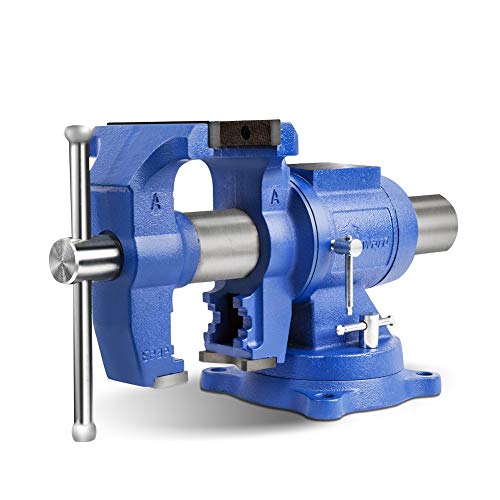
- 5,500-lb clamping force
- 360° rotating head and base
- Top, pipe, and V-jaws
Best For: Demanding workshop and DIY jobs
Warranty Pick
Wilton 550P 5-1/2-Inch Swivel Bench Vise
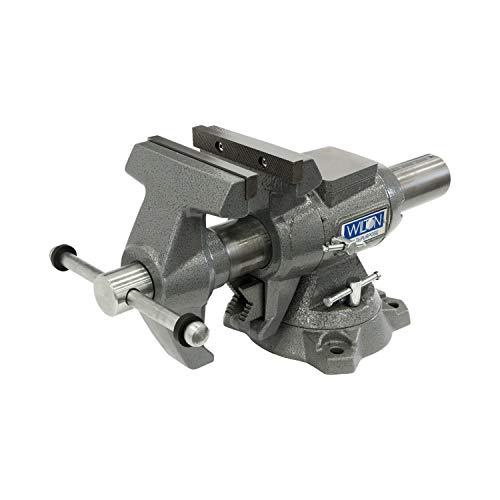
- 360° head with 30° indexing
- Replaceable hardened steel jaws
- Lifetime manufacturing-defect warranty
Best For: Versatile utility workshop use
Balanced Power Pick

- 5,512-lb clamping force
- 360° base and front-jaw rotation
- Pipe jaws and polished anvil
Best For: Mixed metal, pipe, and workshop tasks
Home Workshop Pick

- 4.5-inch jaws with 3-inch opening
- 240° rotating head
- Compact 9-pound design
Best For: General home workshop clamping
Heavy-Duty Swivel Pick
VEVOR 6-Inch Double-Swivel Bench Vise

- 360-degree rotating head and swivel base
- 30 kN clamping force with grooved jaws
- Ductile-iron body for demanding use
Best For: Flexible home or industrial clamping, grinding, and fixing
Versatile Workshop Choice
VEVOR 6.5-Inch 360-Degree Swivel Bench Vise

- 360-degree vertical and horizontal rotation
- 24.98 kN clamping force with pipe and V-jaws
- Includes magnetic jaw pads and large anvil
Best For: Mixed metalworking, pipe repair, and woodworking tasks
Maximum Clamping Pick
Forward DT150B 6-Inch Rotating Bench Vise
- At least 6,500 pounds of clamp force
- 360-degree rotating head and swivel base
- Three jaw configurations for varied materials
Best For: Heavy-duty DIY and industrial cutting, grinding, and tapping
Best Portable Pick

- 360° swivel base for flexible positioning
- Clamps to workbenches up to 4 inches thick
- Portable cast-steel design for light-duty projects
Best For: Home workshops and portable, general-purpose tasks
Best Heavy-Duty Capacity

- 6.57-inch jaws with up to 9.3-inch reverse opening
- Up to 4,496 pounds of clamping force
- Handles flat stock and 0.6–2.8-inch pipe
Best For: Demanding workshop and metalworking applications
Best Balanced Heavy-Duty Pick

- 6-inch jaws with a 5.9-inch opening
- 360° locking base and 4,496-pound clamping force
- Clamps flat stock and pipe up to 2.9 inches
Best For: Versatile heavy-duty bench work with moderate capacity
Heavy-Duty Pick – Forward DT08125A 5-Inch Swivel Bench Vise
The Forward DT08125A is a strong choice among swivel bench vises when you need substantial clamping power and flexible positioning. Its 5-inch jaws, ductile-iron construction, rotating head, and swivel base suit demanding workshop and DIY tasks.
Best For: Heavy-duty grinding, cutting, tapping, and general work on large or complex pieces.
Pros:
- 360-degree rotating head and swivel base allow clamping at varied angles.
- Rated for at least 5,500 pounds of clamping force.
- Includes top, pipe, and V-jaw configurations.
- Large reinforced anvil supports forming and workshop tasks.
Cons:
- At 33 pounds, it is substantial for lighter home workshops.
- Its industrial capacity may be more than needed for occasional jobs.
Choose this model if versatility and high clamping strength matter more than minimizing size or weight. The rotating head and multiple jaw options make it especially adaptable.
Warranty Pick – Wilton 550P 5-1/2-Inch Swivel Bench Vise
The Wilton 550P stands out among swivel bench vises for its 5-1/2-inch jaws, indexed rotating head, and durable multi-purpose design. It combines replaceable gripping surfaces, pipe jaws, V-jaws, and a built-in anvil for varied shop work.
Best For: Users who want a versatile utility vise backed by a lifetime warranty against manufacturing defects.
Pros:
- 360-degree rotating head indexes at 30-degree increments.
- Replaceable hardened steel jaws provide serrated grip.
- Pipe jaws and V-jaws handle round and pipe stock.
- Large built-in anvil supports forming and shaping.
Cons:
- Its 40-pound weight may require a sturdy workbench.
- The utility-focused design is larger than some homeowner vises.
The 550P is a practical option when repeatable positioning, replaceable jaws, and long-term warranty coverage are priorities. Its broad feature set suits a dedicated workshop.
Balanced Power Pick – PONY 5-Inch Swivel Bench Vise
The PONY 5-Inch is one of the more flexible swivel bench vises for users who want rotation in both the base and front jaw. With 5-inch capacity, dual base lock nuts, pipe jaws, and a polished anvil, it supports a wide range of workshop tasks.
Best For: Home and workshop users handling metal, pipe, and general cutting, sanding, sawing, or gluing work.
Pros:
- Base and front jaw each provide 360-degree adjustment.
- Up to 5,512 pounds of clamping force.
- Includes serrated jaw faces, pipe jaws, and a forming horn.
- Ground and polished anvil provides a useful work surface.
Cons:
- Its broad multi-purpose design may be unnecessary for simple clamping.
- Heavy-duty mounting is important to support its capabilities.
This PONY model offers a strong balance of capacity and positioning flexibility. It is a compelling choice when you regularly switch between flat work, round stock, and anvil tasks.
Home Workshop Pick – Yost LV-4 Swivel Bench Vise
The Yost LV-4 is a compact homeowner option among swivel bench vises, with a 4.5-inch jaw width, 3-inch opening, and a 240-degree rotating head. Its smaller 9-pound format makes it easier to suit a home workshop than heavier industrial models.
Best For: Home workshop users who need a compact vise for general clamping and pipe work.
Pros:
- 240-degree rotating head helps position workpieces.
- 4.5-inch jaws open to 3 inches.
- Handles pipe from 0.6 to 1.85 inches in diameter.
- Includes a 3.5-by-2.7-inch anvil work surface.
Cons:
- Mounting hardware is not included.
- It offers less rotation and jaw capacity than the larger 360-degree models.
- The lighter 9-pound body is aimed at homeowner use rather than heavy industrial work.
The LV-4 makes sense when space and manageable weight matter. It provides useful swivel movement and an anvil without the bulk of a heavy-duty bench vise.
Heavy-Duty Swivel Pick – VEVOR 6-Inch Double-Swivel Bench Vise
For buyers comparing swivel bench vises, this VEVOR model stands out with both a rotating vise head and swivel base. Its ductile-iron construction, grooved jaws, and 30 kN clamping capacity make it a practical choice for demanding clamping, grinding, and fixing work.
Best For: Home workshops and industrial users who need flexible workpiece positioning and strong general-purpose clamping.
Pros:
- 360-degree rotating head plus swivel base for flexible positioning.
- Ductile-iron construction designed for tough working conditions.
- Grooved jaws help grip pipes and other rounded materials.
- Polished lead screw and guide rail support smoother, more precise operation.
Cons:
- The listed 5-inch jaw width is smaller than some larger bench-vise options.
- At 19.1 kg, it may be cumbersome to reposition once installed.
This is a well-rounded swivel bench vise for users who value rotation and durability without moving to an oversized model. Its combination of pipe-gripping jaws and smooth adjustment suits varied workshop tasks.
Versatile Workshop Choice – VEVOR 6.5-Inch 360-Degree Swivel Bench Vise
This VEVOR is one of the more versatile swivel bench vises for mixed workshop work. It combines a 6.5-inch jaw width, 5-inch opening, vertical and horizontal 360-degree rotation, pipe and V-jaws, and included magnetic jaw pads.
Best For: Metalworking, pipe repair, woodworking, and projects requiring broad positioning flexibility.
Pros:
- 360-degree swivel head and base allow adjustments in multiple directions.
- Up to 24.98 kN of clamping force for heavy-duty work.
- Pipe jaws and V-jaws accommodate round and irregularly shaped materials.
- Magnetic jaw pads help protect delicate workpieces from scratches.
Cons:
- Its 38.9-pound weight makes it less convenient to move between work areas.
- The larger design may require a sturdy, properly sized workbench.
Choose this model when versatility matters as much as raw clamping strength. The rotating head and base, protective jaw pads, and large anvil give it a broad range of workshop applications.
Maximum Clamping Pick – Forward DT150B 6-Inch Rotating Bench Vise
The Forward DT150B is a strong contender among swivel bench vises, pairing a 6-inch jaw with a 360-degree rotating head and swivel base. Its stated 6,500-pound minimum clamp force and multiple jaw configurations make it suited to substantial workshop jobs.
Best For: DIY and industrial users who need high clamping force for cutting, grinding, tapping, and work on pipes or irregular parts.
Pros:
- At least 6,500 pounds of clamping force for demanding applications.
- 360-degree rotating head and swivel base support angled work.
- Three jaw options include replaceable top jaws, pipe jaws, and V-jaws.
- Large reinforced anvil supports grinding, cutting, and tapping tasks.
Cons:
- At 42 pounds, it is relatively heavy for frequent repositioning.
- The 2 5/8-inch throat depth is shallower than some larger vise designs.
This model emphasizes strength and jaw versatility over portability. Its reinforced construction, broad clamping options, and rotating design make it a practical choice for a securely mounted home or industrial workbench.
Best Portable Pick – 3.2-Inch 360° Clamp-On Vise
For shoppers comparing swivel bench vises for lighter workshop and home tasks, this compact clamp-on model emphasizes portability and flexible positioning. Its 3.2-inch jaws open to 2.79 inches, while the base clamps to workbenches up to 4 inches thick.
Best For: Home workshops, woodworking, conduit cutting, drilling, gluing, sanding, and other light-duty projects where portability matters.
Pros:
- 360° swivel base supports convenient working angles.
- Clamp-on installation suits various workbenches and is easy to remove.
- Cast-steel construction, hardened jaws, and a textured gripping surface support durable holding.
- Includes a large anvil area for added versatility.
Cons:
- The 3.2-inch jaw width and 2.79-inch opening are smaller than those of the heavy-duty options.
- Its portable design is intended for general-purpose and light work rather than the most demanding jobs.
This is a practical choice when you need a swiveling vise that can move between work surfaces. Its relatively light 1.98 kg build and clamp-on format make it especially convenient for occasional projects.
Best Heavy-Duty Capacity – 6.5-Inch Ductile-Iron Vise
This large swivel bench vise is built for demanding workshop use, combining a 6.57-inch jaw width with a 6.5-inch forward opening and a 9.3-inch reverse opening. Its 360° locking base and ductile-iron construction make it suited to substantial workpieces.
Best For: Heavy-duty drilling, pipe cutting, sharpening, grinding, cutting, tapping, and projects requiring broad jaw capacity.
Pros:
- 60,000 PSI ductile-iron body with a powder-coated, rust-resistant finish.
- Provides up to 20 kN/4,496 pounds of clamping force.
- Multi-jaw design handles flat stock and pipes or tubes from 0.6 to 2.8 inches in diameter.
- Includes replaceable serrated jaws, magnetic jaw pads, and mounting hardware.
Cons:
- At 27 pounds, it is substantially less portable than compact clamp-on vises.
- Its large footprint and heavy-duty capacity may be more than needed for small projects.
Choose this model when maximum capacity and holding strength matter more than easy relocation. The generous openings, pipe-clamping range, and included hardware make it a well-equipped permanent bench option.
Best Balanced Heavy-Duty Pick – 6-Inch Swivel Workbench Vise
Among swivel bench vises, this 6-inch model offers a balance of substantial capacity and a slightly lighter build than the larger 6.5-inch version. It has a 5.9-inch jaw opening, a 360° locking base, and a ductile-iron body for demanding bench work.
Best For: Workshop users who need strong clamping for drilling, pipe cutting, sharpening, grinding, cutting, and tapping without choosing the largest vise in the range.
Pros:
- 60,000 PSI ductile-iron construction and powder-coated finish support durability.
- Delivers up to 20 kN/4,496 pounds of clamping force.
- Multi-jaw design accommodates flat material and pipe or tube workpieces from 0.6 to 2.9 inches.
- Includes magnetic jaw pads, bolts, nuts, and a manual for installation.
Cons:
- Its 5.9-inch opening is smaller than the 6.5-inch model’s forward opening.
- The 25-pound weight makes it better suited to a fixed bench than frequent transport.
This model is a sensible middle ground for a workshop that needs heavy-duty strength and versatile jaw geometry. It retains the 360° positioning and strong clamping performance while weighing slightly less than the largest option.
How We Picked These Swivel Bench Vises
We focused on the features that most affect real-world usability: jaw width and opening, swivel range, head or body rotation, mounting requirements, construction, anvil space, and the type of work each vise is suited to. The selection includes compact clamp-on models as well as larger ductile-iron vises designed for permanent bench installation.
Because specifications and included hardware can vary by listing, confirm the current dimensions, weight, mounting pattern, and maximum opening before buying. A vise’s advertised clamping force is useful for comparison, but bench rigidity and proper installation are equally important.
Quick Comparison
| Best For | Look For | Typical Choice |
|---|---|---|
| General workshop use | 5- to 6-inch jaws, swivel base, replaceable jaws | Mid-size heavy-duty bench vise |
| Large or demanding work | 6-inch-plus jaws, ductile iron, high clamping force | Heavy-duty multipurpose vise |
| Woodworking and repairs | Smooth adjustment, useful throat depth, broad anvil | Homeowner or multipurpose model |
| Small spaces or occasional jobs | Clamp-on base, compact footprint, low weight | Portable table vise |
Key Buying Factors for Swivel Bench Vises
Jaw Size and Opening
Wider jaws generally provide more support for large workpieces, while maximum opening determines how much material the vise can accept. For household repairs and light fabrication, a 4- to 5-inch vise is often sufficient. Larger projects may justify a 6- or 6.5-inch model, provided your bench can support it.
Swivel and Rotation Features
A swiveling base lets you reposition the work without unbolting the vise. Some designs also rotate or pivot the head, which is helpful when drilling, filing, or working on multiple faces. Check how the locking mechanism operates; a secure lock is more important than rotation range alone.
Construction and Clamping Strength
Cast or ductile iron bodies are common for fixed workshop vises, but construction quality varies. Look for reinforced slides, substantial base hardware, replaceable serrated jaws, and a smooth screw. Avoid applying extreme force if the vise is mounted to a lightweight or flexible bench.
Mounting and Workspace Fit
Measure the bench thickness, available clearance, and bolt pattern before ordering. Permanent bolt-down models offer the greatest stability, while clamp-on vises are easier to move but usually handle less demanding work. Leave enough room to turn the handle and rotate the base.
Who Should Buy Which Swivel Bench Vises?
Choose a compact clamp-on vise if you rent, have limited bench space, or need a portable solution for light woodworking, cutting, and home repairs.
Choose a 4.5- to 5.5-inch swivel vise for the best all-around balance of capacity, stability, and price. This range suits most DIY maintenance, hobby fabrication, and general shop tasks.
Choose a 6- to 6.5-inch heavy-duty model if you regularly work with larger stock, pipe, hardware, or metal parts. Prioritize a rigid mounting surface and a locking swivel base.
Choose a rotating-head design when access from multiple angles matters more than a simple fixed-body setup. It can reduce repositioning time, especially for drilling, filing, and irregular workpieces.